The combination of increasing digital consumption, targeted advertising, engaged audiences, diverse content, a favorable regulatory environment, economic growth, and innovative advertising formats has positioned podcast and streaming audio advertising as the fastest growing revenue channel in Asia.
Top Podcast and Streaming Audio Companies in Asia
The podcast and streaming audio industry in Asia is booming, with several companies leading the charge in delivering diverse and engaging content to millions of listeners. Here are some of the top players in the region:
Podbean: While Podbean is a global platform, it has a significant presence in Asia. Known for its user-friendly interface and robust hosting services, Podbean supports podcasters with monetization options and detailed analytics. It is a preferred choice for many Asian content creators2.
These companies are at the forefront of the podcast and streaming audio revolution in Asia, driving innovation and expanding the reach of audio content across the region.
Is podcasting a suitable or great career for a Filipino who studies broadcast journalism or mass communication in the Philippines?
As a media practitioner, should a Filipino working as a radio broadcast find career and financial fulfillment when choosing podcasting?
For students, how can they start build a career in podcasting in the Philippines?
What skills are required to be proficient in podcasting? Is having a good communication skill enough? Will having a technical background in social media, the internet, programming and digitial audio production be advantageous?
Podcasting is a form of audio content creation that has been growing in popularity and accessibility in recent years. Podcasts are typically episodic, on-demand, and distributed online via various platforms and apps. Podcasts can cover a wide range of topics, genres, and formats, from news and education to comedy and storytelling. Podcasting can be a suitable or great career for a Filipino who studies broadcast journalism or mass communication in the Philippines, depending on their goals, skills, and interests. In this essay, I will discuss some of the benefits and challenges of podcasting as a career, as well as some tips and resources for aspiring podcasters.
One of the benefits of podcasting as a career is that it can offer a lot of creative freedom and flexibility. Podcasters can choose their own topics, style, tone, and audience, as well as their own schedule and pace. Podcasters can also experiment with different formats and techniques, such as interviews, solo shows, co-hosted shows, live shows, scripted shows, etc. Podcasting can also be a way to express one’s passion, expertise, or perspective on various issues and subjects. Podcasting can also be a way to build a loyal and engaged community of listeners who share similar interests or values.
Another benefit of podcasting as a career is that it can be relatively low-cost and easy to start. Podcasting does not require a lot of expensive or complicated equipment or software. A basic podcast setup can consist of a microphone, a computer, an audio editing software, and a hosting service. There are also many free or affordable resources and tools available online for podcasters, such as tutorials, guides, courses, forums, directories, etc. Podcasting can also be done from anywhere with an internet connection, which can be convenient for remote work or travel.
However, podcasting as a career also has some challenges and drawbacks that need to be considered. One of the challenges of podcasting is that it can be very competitive and saturated. According to [Spotify](^4^), there are over 2 million podcasts available on its platform alone⁵, and the number is growing every day. This means that podcasters need to find ways to stand out from the crowd and attract and retain listeners. This can involve having a unique value proposition, a niche market, a consistent quality, a strong marketing strategy, etc.
Another challenge of podcasting is that it can be difficult to monetize and sustain. Podcasting is not a get-rich-quick scheme; it takes time, effort, and patience to build an audience and a reputation. Podcasting revenue streams can include advertising, sponsorship, subscription, donation, merchandising, etc., but they often depend on having a large or loyal fan base. According to [Podcast Insights], the average CPM (cost per thousand impressions) for podcast ads ranges from $18 to $25, which means that a podcast with 10,000 downloads per episode can earn around $200 to $250 per episode from ads alone. This may not be enough to cover the costs of production or living expenses for some podcasters.
Therefore, podcasting as a career may not be suitable for everyone. It may be more suitable for those who have a passion for audio content creation, who have a clear vision and goal for their podcast, who have the skills and resources to produce and promote their podcast effectively, and who are willing to invest time and money into their podcast without expecting immediate returns.
For students who want to start building a career in podcasting in the Philippines,
there are some steps they can take to prepare themselves for the industry. Some of these steps are:
– Learn the basics of podcasting. Students should familiarize themselves with the technical aspects of podcasting, such as recording equipment, audio editing software, hosting services, distribution platforms, podcast directories, analytics tools, etc. They should also learn the best practices of podcasting, such as planning, researching, scripting, interviewing, editing, publishing, marketing, etc. There are many online resources and courses that can help students learn these skills, such as [Podcasting for Beginners](^7^) by Buffer⁷, [How To Start A Podcast] by Pat Flynn, [Podcast Launchpad] by Buzzsprout, etc.
– Develop your voice and style. Students should practice their speaking skills and find their own voice and style for their podcast. They should consider their target audience, their niche topic, their tone, their format, etc. They should also listen to other podcasts that inspire them or that are similar to their desired genre or category. They should analyze what makes these podcasts successful or appealing and what they can learn from them.
– Create your own podcast. Students should start creating their own podcast as soon as possible to gain experience and feedback. They should choose a topic that they are passionate about or knowledgeable about or curious about. They should also choose a name and a logo for their podcast that reflect their brand and identity. They should record and edit their first episode and upload it to a hosting service such as [Anchor], [Podbean], [Libsyn], etc. They should also submit their podcast to various distribution platforms and directories such as [Spotify](^4^)⁴, [Apple Podcasts], [Google Podcasts], etc. They should also promote their podcast on social media, on their website or blog, on their email list, etc.
– Grow your audience and network. Students should continue to produce and publish new episodes of their podcast regularly and consistently to maintain and grow their audience. They should also engage with their listeners by asking for feedback, reviews, ratings, comments, questions, suggestions, etc. They should also network with other podcasters, especially those in the same niche or category, by joining online communities, forums, groups, events, etc. They should also collaborate with other podcasters by inviting them as guests, co-hosting shows, cross-promoting each other, etc.
– Monetize your podcast. Students should explore different ways to monetize their podcast once they have established a loyal and sizable audience. They should consider the various revenue streams available for podcasters, such as advertising, sponsorship, subscription, donation, merchandising, etc. They should also research the best practices and strategies for each revenue stream, such as finding the right advertisers or sponsors, creating compelling ads or pitches, setting the right prices or rates, providing value to their listeners or supporters, etc.
Podcasting is a skill that requires more than just having a good communication skill. While communication skill is essential for podcasting, it is not enough to create a successful podcast. Podcasting also requires other skills, such as:
– Technical skills. Podcasting involves using various types of technology and software to record, edit, upload, distribute, and analyze audio content. Podcasters need to have the technical skills to operate and troubleshoot these tools effectively and efficiently. Podcasters also need to have the technical skills to optimize their audio quality and sound design, as well as their SEO and metadata.
– Creative skills. Podcasting involves creating original and engaging content that attracts and retains listeners. Podcasters need to have the creative skills to come up with interesting topics, stories, formats, styles, etc. Podcasters also need to have the creative skills to express their personality, voice, and perspective through their audio content.
– Research skills. Podcasting involves providing accurate and reliable information and insights to listeners. Podcasters need to have the research skills to find and verify sources of information, data, facts, etc. Podcasters also need to have the research skills to analyze and synthesize information and present it in a clear and concise manner.
– Interview skills. Podcasting often involves conducting interviews with guests or experts on various topics or issues. Podcasters need to have the interview skills to prepare relevant and engaging questions, to establish rapport and trust with guests, to listen actively and attentively, to follow up with probing or clarifying questions, to manage the time and flow of the conversation,
etc.
– Marketing skills. Podcasting involves promoting and growing one’s podcast brand and audience. Podcasters need to have the marketing skills to identify and reach their target market, to create and execute effective marketing campaigns, to use various marketing channels and platforms, to measure and evaluate marketing results, etc.
Having a technical background in social media, the internet, programming, and digital audio production can be advantageous for podcasting, but it is not necessary or mandatory. These technical backgrounds can help podcasters improve their technical skills, as well as their creative skills, research skills, interview skills, and marketing skills. However, these technical backgrounds are not substitutes for these skills; they are only supplements or enhancers. Podcasters can still acquire these skills without having these technical backgrounds, as long as they are willing to learn and practice.
In conclusion, podcasting can be a suitable or great career for a Filipino who studies broadcast journalism or mass communication in the Philippines, depending on their goals, skills, and interests.
Podcasting can offer many benefits, such as creative freedom, flexibility, expression, and community building. Podcasting can also pose some challenges, such as competition, saturation, monetization, and sustainability.
Podcasting requires more than just having a good communication skill; it also requires technical skills, creative skills, research skills, interview skills, and marketing skills. Having a technical background in social media, the internet, programming, and digital audio production can be advantageous for podcasting, but it is not necessary.
Google is not removing Google Podcasts in favor of YouTube Podcasts. According to a company spokesperson, “Google Podcasts continues to serve its many audio users around the world”[1]. However, YouTube is reportedly launching a new podcasting service called “YouTube Podcasts”[2], which could potentially replace Google Podcasts in the future. Google has also recently removed the feature that allowed users to access playable podcasts directly from the Google Search results[3], which could be an indication that they are shifting focus to YouTube Podcasts.
YouTube, a Google subsidiary, is experimenting with podcasting and may officially embrace it in the near future. This test allows existing content to be marked as podcasts without manual conversion, giving uploaders access to performance, audience, and revenue data. The podcast content is also displayed on the dedicated Podcasts homepage on YouTube, which is currently only available in the US. Outside of the US, the podcast uploads are displayed as regular YouTube videos. The webpage also displays Google’s third iteration of the podcast logo, colored in blue instead of red.
This move follows the removal of Google Podcasts from Search results, indicating that YouTube may be the ultimate successor for Google Podcasts. As Chrome Unboxed points out, “YouTube is in a unique position to take over the podcasting space”. This could be a great opportunity for YouTube to expand its content library and become a major player in the podcasting industry.
The podcast industry has seen tremendous growth in the past few years, and South East Asia is no exception. According to a report by Deloitte Insights, the podcast industry in the Asia Pacific region has grown far faster than the overall media and entertainment market. In particular, the Philippines is seen as the launching pad for podcast expansion throughout Southeast Asia.
The most popular podcasters in South East Asia are those who focus on storytelling and news. Ron Baetiong, the founder of Podcast Network Asia, is one of the most popular podcasters in the region. He is known for his storytelling and his focus on Filipino stories. Other popular podcasters in the region include those who focus on news, such as the South Asian Studies at Stanford (SASS) Podcast, which features conversations between the Center for South Asia at Stanford and guests a connection to Stanford.
The amount of money that podcasters can earn in South East Asia varies depending on the size of their audience and the type of content they produce. Generally, podcasters in the region can earn anywhere from a few hundred to a few month.
The most popular topics for podcasters based in South East Asia include news, politics, culture, business, and entertainment. For example, the South Asian Studies at Stanford (SASS) Podcast covers a wide range of topics, from poetry to politics, from manuscript collecting to music, from business to Bollywood. Similarly, Ron Baetiong’s Podcast Network Asia focuses on Filipino stories and culture. [1]
Overall, the podcast industry in South East Asia is growing rapidly, and there are many popular podcasters in the region who are making a living off of their content.
Yes, podcasting can be a good source of income for those who work in the media industry. According to the Pew Research Center, the median wage in 2020 for news analysts, reporters and journalists in the radio broadcasting industry was about $49,000, while editors in the radio broadcasting industry had a median annual wage of about $79,000.[1] Additionally, the Interactive Advertising Bureau reported that self-reported podcast advertising revenue in the U.S. reached $257.4 million in 2017, achieving a Year-on-Year growth of 117%.[2]
The podcasting industry is still growing and is not yet saturated. According to Insider Intelligence, the number of monthly US podcast listeners will increase by 6.1% year-over-year (YoY) to 125 million in 2022.[3] This suggests that there is still room for new players to enter the podcasting industry.
If you are an aspiring podcaster who lives in South East Asia, there are several strategies and topics to discuss in order to be successful in podcasting. Firstly, it is important to understand the podcast landscape in East and South East Asia. According to an article by Podnews, there is an independent podcast creative company based in Jakarta that produces podcasts in both English and Indonesian. This is a great resource to understand the podcast landscape in the region and to get ideas for topics and strategies to use in your podcast.
Secondly, it is important to have a clear strategy for your podcast. Forbes suggests that podcasters should measure success by following two key metrics: velocity of downloads and listener engagement. Additionally, they suggest that podcasters should focus on creating content that is unique, relevant, and engaging.
Finally, it is important to choose topics that are relevant to the region. The XA podcast is a great resource for understanding the early stage investing ecosystem in the region. Additionally, the GHOST MAPS podcast is a great resource for understanding true Southeast Asian horror stories.
Overall, understanding the podcast landscape in East and South East Asia, having a clear strategy for your podcast, and choosing topics that are relevant to the region are all important strategies for success in podcasting in South East Asia. [1]
According to the BITKOM study, a quarter already hear podcasts – shorter posts are the most popular
Podcasts are still on the rise: One in four Germans (26 percent) say they hear such digital radio shows – in the previous year it was 22 percent. This is the result of a representative survey of more than 1,000 people, ages 16+, on behalf of the digital association Bitkom. So, every eleventh (9 percent) hears podcasts at least weekly, another 9 percent at least once a month. Especially young people like to access podcasts. More than one in three people between the ages of 16 and 29 (35 percent) indicates this. “Whether news, thrillers or relationship talks – the podcast offer is as big as ever and is constantly growing,” says Bitkom expert Dr. Sebastian Klöß, The vast majority of Germans, on the other hand, have not gotten the taste: 70 percent of respondents said they never hear podcasts.
Popular topics: news, film, television, sports, comedy
Particularly popular among podcast listeners are the news and politics (45 percent) and film and television (41 percent). Similarly many are interested in sports and leisure as well as comedy (each 38 percent). One in three (33 percent) likes listening to music podcasts, closely followed by the topics of science (29 percent) and education (28 percent).
For the duration of a podcast, the majority of listeners prefer short shows. Half (49 percent) say a podcast should ideally be between 5 and 10 minutes, and 5 percent like even shorter podcasts. A quarter (24 percent) likes programs with a length of between 10 and 15 minutes. For only 7 percent, the preferred duration is over 60 minutes. The average value is 13 minutes. “With the smartphone, podcasts can be heard very well on the way – for example, on the way to work. But podcasts are also popular in household chores or as a companion in sports, “says Klöß. But not all listeners endure until the end of the episode. Only two out of five (38 percent) say: I usually listen to podcasts completely.
Bitkom’s tech podcast is called “Ctrl-Alt-Del.” The interviews, talks and keynote speeches are about trends around the digitization of the economy and society. The podcast is available on Spotify, iTunes, Soundcloud, on all major podcast apps, and on the website www.bitkom.org/podcast .
Methodological note: The basis for the information provided is a representative survey conducted by Bitkom Research on behalf of Digitalverband Bitkom. 1,003 persons in Germany aged 16 and over were contacted by telephone. The questions were: “How often do you listen to podcasts?”, “What topics do you listen to podcasts?”, “How long is a podcast ideally so that you like to hear it?”, “Listen to podcasts usually completely or only partially ? “
What are the most popular topics in podcasts in the US and Europe? How do these categories “behave” according to the time of day? How can these analyzes help the development of a rapidly growing sector such as podcasting? And again, can the listening behaviors of a category influence the strategic plan for promoting a podcast?
Voxnest – a leading company in the podcasting market – has attempted to answer these questions by bringing to light some data and topics based on listening to podcasts related to their property, with the main objective of opening a discussion and discussion table with and for the industry of podcasting.
“The analysis of listening to podcasts based on the categories allows us to understand how the podcasting market is developing and what the audience behaviors are compared to the contents – says Tonia Maffeo , Head of Marketing Voxnest World -. Observing these data is of primary importance, especially in a historical moment like this, in which the giants of the ICT audio are also entering the podcasting market: it is therefore good that all the industry is compared, both to understand how we will move, both to share data entries with those who are betting on audio. “.
Podcasts: the 5 most popular content categories.
To understand how we got to analyze the categories and what are the most popular issues via podcast in a USA / EU comparison, Voxnest analysts have collected all the European countries under the same hat in order to compare them with the USA (a country that, again according to Voxnest’s analysis, it “holds” the record for podcast listeners in the world): a rather different picture of people’s listening tastes emerges, also in relation to time slots.
But let’s go into detail: among the first 5 categories examined by Voxnest regarding the United States , Religion stands out , followed by Culture , Sport , History and finally News and Information .
As for the most popular category by Americans, Religion, it can be said that there are mainly two favorite moments for listening to dedicated podcasts: in the morning between 7.00 and 8.00, and in the evening after 21.00.
Sporte News and Information maintain a constant trend throughout the day, with a substantial difference linked mostly to the peaks that they record: Sport, in fact, is most listened to around 7.00 and 17.00, while news-related podcasts record three peaks, one around 8.00 am, one around 6.00 pm and finally one more pronounced at around 9.00 pm: a countertrend compared to what is usually expected, namely that listening to the news is the prerogative of the first morning.
In light of this, it is not incorrect to say that the listening behavior of news podcasts is similar to that of TV, which records the peak of spectators in the various newscasts during the evening.
Regarding the History category, the attention of the listeners is concentrated in the early hours of the day, around 7.00 am, where we find a first peak.
After that, the interest gradually declines during the course of the day, except for a final recovery, between 9.00 pm and 10.00 pm, similar in size to the morning peak, to then enter the night band where the natural lowering of the you listen.
The second US category is that of Culture, which the Americans prefer to “consume” in the morning: listening grows in fact after 6.00 in the morning with a clear peak at 8.00, which is slowly diminishing after 9.00.
The Top 5 Categories in Europe
The data of Europe photograph a completely different situation: in the first place in the most listened to categories there are all the podcasts related to the theme Business followed by Culture , Psychology , History and, finally, Education .
The obvious datum in common with the USA concerns essentially the most listened time slot, transversal to all the categories, that is the 7.00 of the morning. Before school, before work, at a time when many find themselves already in the car in long lines or doing some morning fitness.
The Business category has a constant trend in the chart examined by Voxnest, with a second peak detected after 16.00. The same happens in general, albeit in a slightly minor form, also for the Culture and Psychology categories.
The case of Storia is different, where Europeans prove to be more attentive listeners between 16.00 and 18.00. Podcasts related to the Education category, however, are heard most often between 12.00 and 13.00 and between 16.00 and 17.00, as well as around 8.00.
Basically, both the USA and Europe prefer timetables linked above all to moving from home to the office or to school, confirming a rather deep-rooted tendency to listen to podcasts mainly by car or public transport, but also in gym or while facing the morning appointment with running.
The analysis of Voxnest’s data allows podcasters, publishers, as well as advertisers, to draw a fairly realistic picture of the type of listener and his preferences , which may have repercussions on the podcasting business, on the monetization for podcasters of own audio content and on advertising campaign planning.
The complexity of categorization
Going back to the Culture category, it is a container of almost endless topics, it contains a wide range of contents. And it is here that an important issue emerges, concerning the entire podcasting market: how to categorize the content of a podcast .
The data take into account the fact that the categories analyzed are rather wide (like the one related to Culture), and that is why it would be necessary to rethink the categorization methods, a hot topic in the podcasting industry, so much so that Apple recently announced that by the end of this summer, some categories of its podcast section will be rethought and added.
If on the one hand, it denotes trust and freedom, leaving podcasters the choice to register under a specific category, on the other it is very useful and necessary to refine the tools able to support podcasters in this choice, to simplify the process and help them to making the most of the content they propose, so they can be traced more easily and maybe even in more than one category.
«The ideal to solve this problem? It could be an artificial intelligence that can help the podcaster in choosing to belong to one category or another, “says Maffeo. ” That of podcasting is a market in continuous evolution and like all” new things “it needs constant adjustments, and shared reflections on the progress of the market and the medium “.
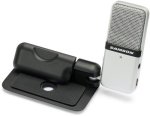
I purchased the Go Mic samson for voiceover recordings, commentary for gameplay videos and expressive readings. For the price that has recorded sound quality is impressive. The clip with input for the screw (rods or clips) as well as the spring is very convenient.
It has 3 recording modes: direct, omnidirectional and -10 dB to attenuate the noise.
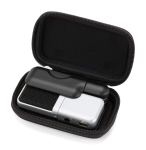
The microphone has a small and light case.
The box is big enough, I expected a product of other dimensions. It’s very small !!!! connected to the mac (Yosemite) and recognized on the fly, immediately made a screen recording test with quick time and proven the difference with the Logitech HD C525 webcam, it is like switching from a panda 30 to an Audi A6. wonderful voice (despite my heavy Genoese cadence) does not require audio production (for what I need, if you record an instrument or sing it is another matter).
I did not read the manual (I did not have the time) but I noticed that the green LED turns red when it is clipped, which is very convenient;)
Last but not least, I do not know how Winzoz works, but it is absolutely not true that connecting to the Mac becomes the main sound card and you have to attach the speakers to the mic: just go to System Preferences and select the correct output to continue listen through the speakers connected to the headphone output of the Mac;) (I enclose screenshots to show where to put your hands).
In short, a product of excellent construction, beautiful solid, provided with a nice long USB cable and practical case: for what I need (record the screen to make tutorials) goes beyond perfection;)
After a thousand calculations, I bought this microphone and I must say that the final choice I got it right in full. I recommend it without any doubt.
POSITIVE:
1) Brand of great quality
2) Very small size and weight (it is in the palm of my hand, which is already small of its own), therefore portable and not only table
3) Three different settings of audio directionality, therefore not it’s just omnidirectional, but you can exclude the back of the microphone practically, or not.
4) What for me is fundamental: It is compatible with iPhone and smartphone, that is if I wanted, I buy an adapter and connect it directly to the phone without the need for external power supply via hub (which serves other microphones)
5) The clamp acts as a microphone case when it is closed, but also has feet underneath and acts as a support base for the microphone when you want to use it by placing it on the table, but also the same clamp is used to position the microphone above the video of your laptop. How to say: designed very well.
6) Excellent sound, without background noise. Driver that installs very well automatically and without having given the slightest problem.
7) Long USB cable and not as often happens … supercorto. This allows you to connect it without problems to a PC tower, to understand, and not just a laptop.
8) The supplied zippered case is strabella (see photo)
9) Impeccable packaging, ditto instructions (English only).
10) Possibility to connect the headphones to the microphone (the only thing I have not tried and that at the moment I do not need).
11) Good value for money when compared to microphones that cost 4 or 5 times as much, without offering 4 or 5 times the quality of this.
NEGATIVE:
Nothing at all!
Spotify has announced the official debut of its new platform Spotify for Podcasters , at the moment, only in beta.
The new service will be clearly focused on the management of podcasts and related feeds.
The podcasts on the Spotify platform reach an audience of about 180 million listeners worldwide and the new tool announced will allow creators of this type of content to manage multiple aspects of their podcast: you can easily publish the different episodes, more easily reach a more listeners , consult the statistics on ratings divided by demographics, geographical position , involvement and appreciation of listeners.
The new platform of Spotify will increase its audience because it will make it possible to publish podcasts loaded on other platforms, simply by sharing the relevant RSS feed.
As anticipated, Spotify for Podcasters is currently only available in beta, accessible by going to https://podcasters.spotify.com/







 Radio Online Now