All posts by RadioOnlineNow

What Is The Role of Smart Speakers in People’s Home in the Future

A personal assistant , able to give an answer to almost any question, who plans the day, points the alarm clock , adjusts the lighting of the apartment and shoots the right playlist at the right time.

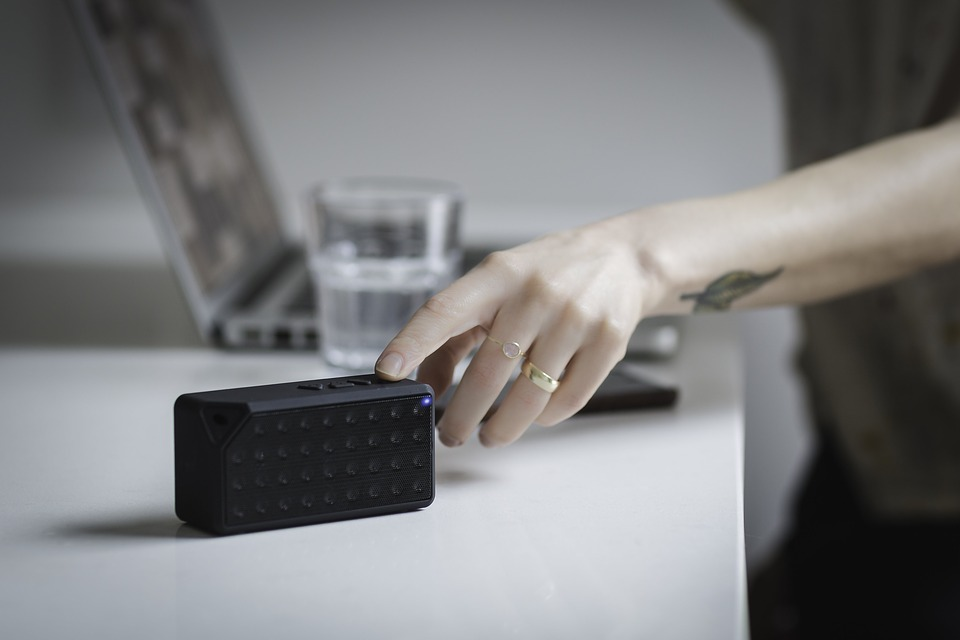
This, and much more, is what a smart speaker can do . Usually a small object connected with the wi-fi and hi-tech devices of the house . So far the talents, now the painful notes: do not cook, do not iron, do not clean and can not make coffee. At least for now.

It is very likely that, even if it was not yet present in your homes, you have already seen it. Because the market in this specific sector is constantly expanding . According to data provided by the analysts of Canalys, from April to June world sales have almost tripled , from 5.8 to 16.8 million units ( + 187% on an annual basis ).

Going into detail, the market is driven by technology giants. Just think that, according to data from Canalys, last June Google recorded a growth of 449% compared to sales in the second quarter of 2017. This powerful growth led Big G to obtain a market share of 32.3% (a year before, it was 16.9%).

A trend that has taken Amazon out of the first position, which it held twelve months ago with 82.3% of the emerging smart speaker market , before “plunging” to a 24.5% stake, selling Echo 4.1 million . In the third and fourth positions there are two Chinese companies, Alibaba and Xiaomi , which have sold 3 million and 2 million speakers respectively (17.7% and 12.2% of the market).

But the smart speakers of Google, Home and Home mini , were launched in Italy only in March 2018. Password, ” Ok Google ” and activates a world of interactive possibilities to be discovered. Google Home is probably the top currently available on the market. The conversation with the device is fluid and online searches are optimized, as is natural to imagine, practically perfect.

Home mini , basically, offers the same features as the larger version . Change the shape, round and smaller, in addition to the price: decidedly lower. The most marked difference is that concerning the audio part, it is advisable to integrate it with other speakers if you want to listen to music.

Just in these days, however, Amazon has led to the counterattack landing in the Italian market with Alexa ( the world’s first smart speaker , launched in 2014), the voice assistant of the ecommerce giant, in fact, now “speaks” our language and aims to conquer Italy.

Amazon Echo is the flagship of the range, with modern design and extraordinary usability. It has seven deactivable microphones that accurately understand where the interlocutor is talking, is the Google Home competitor .

But that’s not all, there are also: Echo Dot , a more compact and portable version, like Google mini , suitable for the smaller rooms of the house; Echo Sub , a wireless woofer designed to create stereo systems with other Echo compatible devices ; Echo Plus , “specialized” in the control of compatible smart appliances.

Echo Spot , instead, in addition to speakers and microphones, is based on a circular display and a video camera. The screen displays the answers of the voice assistant, integrating them with graphic information, but can also be used for viewing content or video calls.
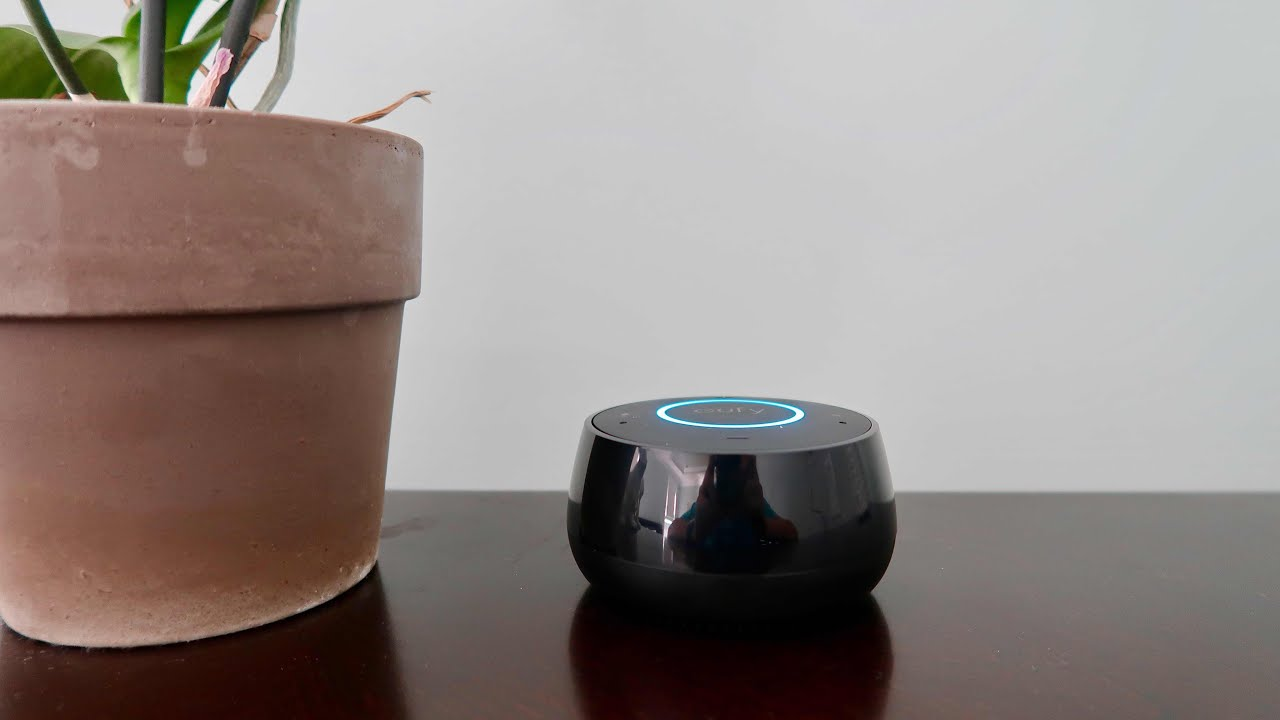
Will Radio Become Obsolete as Smart Speakers Become Popular

There is a market that is exploding on the Atlantic side (USA and UK) that will revolutionize listening to music , will change our habits and will increase even more the number of hours spent listening to our favorite artists: they are smart speakers . Objects of design (we would miss) that respond to our voice commands. “Alexa, I want a playlist at 90 bpm to do exercises”, say if you use Amazon Echo. Or “Ok Google, do you make me feel the new song of Calcutta, the one with the name of a footballer?”, If instead you are happy owners of Google Home.

You will talk to them, they will listen to you and grant your musical desires . It is no longer a click, there are no hypertexts, we are in the phase of artificial intelligence that processes in a semantic way. What will we listen to then? How will we make our selections? Will we try the thrill of listening to roulette? Will we choose the butler speaker?

Some numbers on the use of smart speakers
To make you understand the impact of these devices in our lives we use the numbers : for Music Ally the rosea forecast is that by the end of 2018 will be sold about 60 million intelligent speakers, doubling the number of 2017, while in 2016 production will it was only 5 million stopped. For 2022, the forecasts speak of 175 million smart speakers in over 75 million American apartments. Already by the end of this year, in emerging countries like Brazil, China and India, smart speakers will serve a third of the resident population.

The commercial aspect is impressive, but impressive is the speed of their distribution compared to other supports: the smart speakers will reach 50% of the American population in less than 5 years. To give you an example, the phones took almost 7 years, the TV about 13, the radio 20. And it is the radio that pay the highest price, because those who use smart speakers spend 40% less time on the stations FM. A radical change, probably the one that will affect our behavior more heavily because it will act on the experiential factor, on the convenience of use and on the accuracy of the answers to our questions. In addition to moving away from radio stations, smart speakers will “report” us to a more conscious use of listening because they will allow us to live a different experience from the usual.

Speaking again of numbers and surveys, 34% of users using Amazon Echo or Google Home spend more than four hours a day listening to music, compared to 24% of “common” users, even if the audio quality does not affect that much on the choice of the amplifier: only 7% of the owners made a choice based on the purity of the sound, while 14% made their choice based on the accuracy of the speech recognition. They will earn the streaming services, because 48% of the smart speaker owners subscribe to Spotify , Deezer and other Digital Service Providers. And we will also gain our “digital health” because dialogue with Alexa, Cortana or Siri will make us use less the smartphone (- 34%), TV (- 30%), the tablet (- 27%) and the computer (- 26%, Edison Research data for NPR).

And maybe it will also convince us to leave the house when the “skills” of the smart speakers will be integrated with other features, such as those to buy concert tickets . Our tastes will be linked to the TicketOne database for example, and we will find ourselves on the Google Calendar all the organized trip: flight booking, hotel, car rental, tickets, VIP Pass and dinner booked.

The potential of smart speakers
After the beating of Google Glass now they go more cautiously to Mountain View, but we can not deny that their hunger for data is insatiable, in this case in addition to knowing our habits will also know what types we are, the sound of our voice and how we make choices, up to the composition of the sentence.

Put so frightened, but listen to this: in Arkansas the police intervene on the scene of a crime, a man was found strangled in his hot tub; in the house, on display, the agents find an amplifier. At first they notice only the design, but they do not pay attention to the type of speaker they have in front of them: an Amazon Echo. This smart speaker that is used with voice commands, includes a recorder that can “listen” to words, process them, process them, transmit them remotely and respond to the request. Amazon Echo was the first witness to be questioned, in the hope that he would also listen to the murderer’s voice. Amazon, the data holder, rejects the request for the investigation, but then grant the data after the only person investigated had cleared.

Now maybe, it scares even more. But if we leave aside the various datagades: how will these smart speakers affect listening to music?

“Hi Alexa”
“Good morning Fabrizio”
“I would like to listen to Colapesce’s last album ”
“Okay, but would not you prefer a morning playlist to give you a little charge?”
“No thanks, I prefer Colapesce”

If instead I’m connected with a fit watch:

“Hello Alexa”
“Good morning Fabrizio, I noticed that you did not have a restful sleep, I suggest you listen to music for a sweet and harmonious awakening”
“Thanks Alexa, I wanted to listen to Colapesce but maybe you’re right”

Here, Artificial Intelligence will use its rhetorical component to advise you on a specific listening? How much will affect our choices, perhaps even recommending a purchase on Amazon Prime?

Or:

“Ok Google”
“Good morning Fabrizio, I noticed that yesterday you watched some videos of Young Signorino, do you want me to send his videos on TV?”
“But it’s morning and I have to have breakfast again”
“So I suggest you go to Bar XXX that have a 30% discount on cappuccino and croissant ”
” No thanks ”
” Then I propose you a purchase of a coffee machine with capsules ”
Etc.

But there is a less dystopic behavior, that is the possibility of doing more detailed research , such as: “Alexa, I want to listen to all the tracks composed by Tommaso Paradiso “, or “Ok Google, let me listen to all the songs in Spanish sung by Laura Pausini “. Surely the competence will come through which the smart speaker will recognize a song humming or whistling the tune. But will they be choices linked to commercial agreements? And how big will our area of freedom be? Where will the posts be fixed? For now it is about design, technology and experience, but above all the smart IQ of the smart speaker.

YouTube Music Streaming Focuses More on Personal Entertainment

The arena of musical streaming returns to warm up with Google that tries again, much more decisively than in the past. The Mountain View giant has decided to re-launch its YouTube Music service, turning it from a free app into a streaming platform that wants to compete with rival Spotify and Apple Music.

Starting from May 22nd, the new YouTube Music app will be launched in the United States, South Korea, Mexico, Australia and New Zealand, with 14 other countries, including Italy, to follow in the following weeks (here the website, in Italian, according to which “YouTube Music is coming”). The service, mainly musical, will have a free offer with advertising and a premium version, called YouTube Music Premium, for $ 9.99 a month, which in addition to being free of adverts will allow offline downloads, or to let the music go in the background . Who will also want the videos will have the YouTube Premium offer for $ 11.99 a month. While the previous music service, Google Play Music, will be progressively closed.

The most interesting part, however, is the insistence on the ability to customize the streaming experience on the basis of profiling and what Google can know about users. According to Usa Today , the idea is to use the Google Assistant, the artificial intelligence-based digital assistant, to make better recommendations to subscribers. The YouTube manager T. Jay Fowler has in fact described a typical day, in which the user gets up and has a certain type of music, climbs into the car and will have another, arrives at work and will have other customized selections, based on of habits, position and preferences. The discovery of new music is at the heart of Google’s strategy, and also one of the areas where there is probably room to improve the user experience. In a post on the official blog, it is explained that the YouTube Music home screen dynamically adapts to make recommendations depending on the user’s history, where it is and what it is doing. “To the airport? We will recommend some relaxing passages before the flight. Are you entering the gym? We will suggest pieces to speed up the beat “.

YouTube is the first site for online music, but its 1.5 billion monthly visitors mostly use it to listen to songs for free through videos. Now Google seems to want to compete directly with the main music streaming services, Spotify (which was listed on the Stock Exchange in April) and Apple Music, followed by Pandora and Soundcloud.

How to get free 40 Hours of Monthly Music Streaming from Prime Music

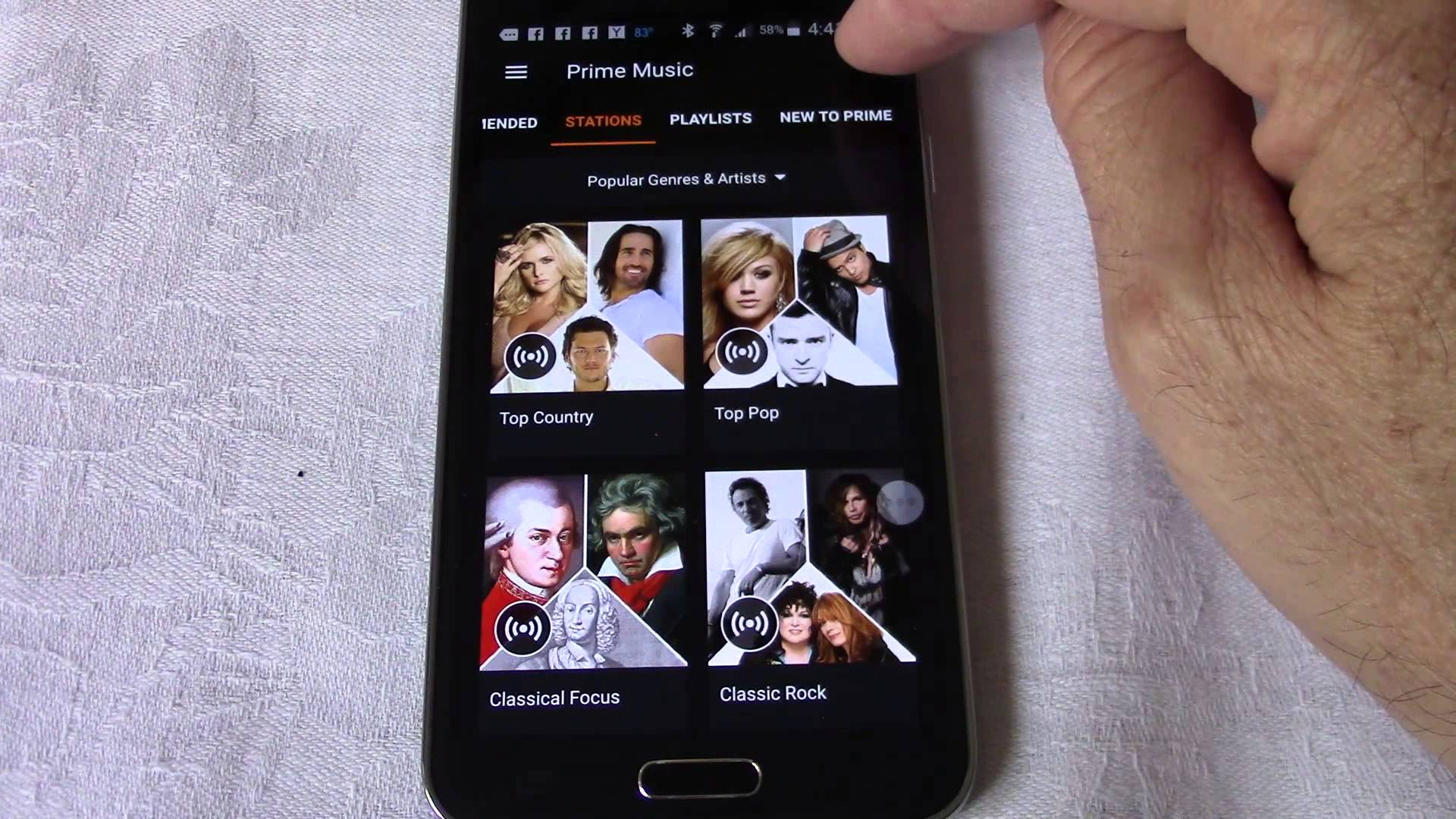
Prime Music is the latest addition to Amazon for all Prime subscribers . This is a free music streaming service – including the Prime package from 36 euros a year in certain markets like Italy – that allows you to access 2 million audio tracks and play 40 hours a month without advertising . Once you reach the threshold, you can no longer use the service and you have to wait until the first day of the following month. In the calculation of the 40 hours the songs purchased, imported or from AutoRip are excluded.

Use can be made via PC, Mac, Android and Apple devices, Web, Fire tablets, Fire TV, Fire TV Stick, Sonos and Denon Heos speakers, as well as cars with BMW Apps and Mini connected. An account can support up to 10 devices .

Remember that this new service is combined with the others already provided by the Amazon Prime subscription , ie unlimited 1-day shipments on over 1 million products and in 1-3 days on many other millions, access to the catalog of films and TV series of Prime Video, a selection of eBooks with Prime Reading , unlimited storage space for photos with Prime Photos, Prime Now in the Milan area, in-game content every month with Twitch Prime, and early access to Flash Deals on Amazon.

“With Prime Music, Amazon Prime customers will be able to listen to up to 40 hours of music every month, without advertising and without additional costs,” says Amazon. “Prime Music offers the best music by Italian and international artists such as Vasco Rossi, Caparezza, Negramaro, Tiziano Ferro, Marco Mengoni, Claudio Baglioni, Giorgia, Thegiornalisti, Maroon 5, Imagine Dragons, Pink, Eminem, U2 and many others”.

Entering the specific of the Prime service you will discover several useful functions. For example there are Radio Prime , which can be customized according to their tastes on the basis of the ratings given to the songs with Prime Music; without counting dozens of playlists edited by the experts of Amazon Music.

Unlike other services – think for example of the limitations of the free version of Spotify – Prime Music allows you to listen to music in any way you want. Songs and albums can be chosen individually and listened to several times . In addition you can also proceed to download the tracks on up to 4 mobile devices.

For those who want a more complete experience there is Amazon Music Unlimited , which allows access to over 50 million tracks and latest releases, and digital music downloads on Amazon.it. In this case, however, after 30 free days of trial must pay 9.99 euros per month.

Status of Apple’s Streaming in 2019 How Many Countries Is It Streaming To

It could debut in 2019 in 100 countries the streaming tv service with which Apple wants to challenge Netflix and Amazon.

After the rumors of recent weeks, to add details is The Information.

The site’s sources explain that the United States will lead the way, then the service will be launched worldwide. And the rumors of recent weeks, reported by the American broadcaster CNBC, seem to be confirmed: Cupertino wants to offer its original audiovisual content – that is, TV programs produced or otherwise purchased exclusively – for free, through a renewed ‘TV’ application, to those who own an Apple device (iPhone, iPad or Apple TV).

The Apple service would then combine the original audiovisual content, distributed free to its users, to a series of external subscription channels. In this way users would not need to install the applications of other streaming services, being able to access directly from the Apple app.

[delay 2018-10-29]

YouTube Music Streaming App Introduces New Features and Options in 4th Quarter 2018 Like Quality Settings

YouTube Music for Android updates | new streaming and download quality options

Google has released an update for its Youtube Music application for the Android platform.

The new features consist of new quality management options streaming and download.

As promised by Google, which last month had announcedconstant updates with improvements for its applications, today Youtube Music for Anroid has received an update.

Youtube Music for Android : new options for audio quality and downloads The new update has the main purpose of allowing the user to better manage the quality of streaming or downloads when watching videos or listening to Music with the application in question.

Review of the Samson Go Portable Podcast Microphone

CLICK HERE TO BUY SHIPS WORLDWIDE

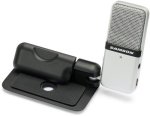
I purchased the Go Mic samson for voiceover recordings, commentary for gameplay videos and expressive readings. For the price that has recorded sound quality is impressive. The clip with input for the screw (rods or clips) as well as the spring is very convenient.

It has 3 recording modes: direct, omnidirectional and -10 dB to attenuate the noise.

The microphone has a small and light case.

The box is big enough, I expected a product of other dimensions. It’s very small !!!! connected to the mac (Yosemite) and recognized on the fly, immediately made a screen recording test with quick time and proven the difference with the Logitech HD C525 webcam, it is like switching from a panda 30 to an Audi A6. wonderful voice (despite my heavy Genoese cadence) does not require audio production (for what I need, if you record an instrument or sing it is another matter).

I did not read the manual (I did not have the time) but I noticed that the green LED turns red when it is clipped, which is very convenient;)

Last but not least, I do not know how Winzoz works, but it is absolutely not true that connecting to the Mac becomes the main sound card and you have to attach the speakers to the mic: just go to System Preferences and select the correct output to continue listen through the speakers connected to the headphone output of the Mac;) (I enclose screenshots to show where to put your hands).

In short, a product of excellent construction, beautiful solid, provided with a nice long USB cable and practical case: for what I need (record the screen to make tutorials) goes beyond perfection;)

After a thousand calculations, I bought this microphone and I must say that the final choice I got it right in full. I recommend it without any doubt.
POSITIVE:
1) Brand of great quality
2) Very small size and weight (it is in the palm of my hand, which is already small of its own), therefore portable and not only table
3) Three different settings of audio directionality, therefore not it’s just omnidirectional, but you can exclude the back of the microphone practically, or not.
4) What for me is fundamental: It is compatible with iPhone and smartphone, that is if I wanted, I buy an adapter and connect it directly to the phone without the need for external power supply via hub (which serves other microphones)
5) The clamp acts as a microphone case when it is closed, but also has feet underneath and acts as a support base for the microphone when you want to use it by placing it on the table, but also the same clamp is used to position the microphone above the video of your laptop. How to say: designed very well.
6) Excellent sound, without background noise. Driver that installs very well automatically and without having given the slightest problem.
7) Long USB cable and not as often happens … supercorto. This allows you to connect it without problems to a PC tower, to understand, and not just a laptop.
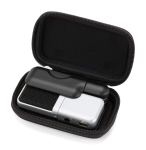
8) The supplied zippered case is strabella (see photo)
9) Impeccable packaging, ditto instructions (English only).
10) Possibility to connect the headphones to the microphone (the only thing I have not tried and that at the moment I do not need).
11) Good value for money when compared to microphones that cost 4 or 5 times as much, without offering 4 or 5 times the quality of this.
NEGATIVE:
Nothing at all!

The Rise of Home Speakers with Built In Radio 4.0 Compatibility (Google Home, Apple HomePod)

A new search for Adobe Analytics offers further revelations on smart speakers. The analysis showed an increase in the number of users: to date, in fact, 43 million Americans have already bought at least one smart speaker. This figure is the result of the increase in the last few months, but this time no major new events have been presented to those already analyzed on NL.

If sales have increased without any significant commercial event, such as black friday or the purchase of Christmas gifts, it means that these numbers are destined to grow. The survey also focused on this: in fact, out of the total number of users examined, about half (45%) already owns a smart speaker and expressed a willingness to buy another one during the festivities of 25 December, while the 23% said they wanted to buy one to give as gifts.

It is not a hidden fact that most smart speaker owners would like to own another one, but the researchers also wanted to investigate the uses that users make of them. The most common activity is always the reproduction of audio of all kinds – both from the Spotify player and from radio stations (as you can also do through the FM World application and other aggregators ), which on podcasts of all kinds – followed by constant updates on the weather.

The weather forecast, in fact, together with the news from the world and concerning traffic, are the most common requests in the time slot from 5 to 9 am – if you put yourself on the side of the users – that translate into the most executed command from the side of the smart speaker. In addition, they are increasing – always taking into consideration the sample being researched and thanks to the simplification of daily activities – those related to shopping: from ordering food to the home, looking for hotels to spend the holidays, until the addition of items to shopping lists on online platforms such as Amazon, Aliexpress and Zalando, already on smart devices.

The forecast of Adobe Analytics on the increase in sales during the Christmas period could, therefore, prove to be spot on.