Tag Archives: podcast

Why Podcast and Streaming Audio Ads Are Dominating Revenue Growth in Asia


Podcast and streaming audio advertising have emerged as the fastest growing revenue channels in Asia, driven by several key factors:

  1. Increasing Digital Consumption: The shift towards digital media consumption is a significant driver. With the widespread adoption of smartphones and high-speed internet, more people are accessing audio content on-the-go. This convenience has led to a surge in podcast and streaming audio listeners1.
  2. Targeted Advertising: Podcasts and streaming platforms offer highly targeted advertising opportunities. Advertisers can reach specific demographics and niche audiences, making their campaigns more effective. This precision in targeting is particularly appealing to brands looking to maximize their return on investment1.
  3. Engaged Audiences: Audio content, especially podcasts, tends to have highly engaged audiences. Listeners often develop a strong connection with podcast hosts, leading to higher trust and receptivity to advertisements. This engagement translates into better ad performance and higher conversion rates1.
  4. Diverse Content: The diversity of content available in podcasts and streaming audio caters to a wide range of interests and languages across Asia. This variety attracts a broad audience base, providing advertisers with ample opportunities to reach different segments of the population1.
  5. Regulatory Environment: In some Asian countries, traditional media channels are heavily regulated. Podcasts and streaming platforms offer a more flexible and accessible advertising medium, allowing brands to navigate regulatory challenges more effectively1.
  6. Economic Growth: The growing middle class in many Asian countries has increased purchasing power, making the region an attractive market for advertisers. As more people gain access to disposable income, the demand for diverse and engaging content rises, further boosting the popularity of podcasts and streaming audio1.
  7. Innovative Advertising Formats: The rise of influencer marketing and native advertising has also contributed to the growth of podcast and streaming audio advertising. Brands are leveraging these platforms to create personalized and impactful advertising experiences that resonate with listeners1.

The combination of increasing digital consumption, targeted advertising, engaged audiences, diverse content, a favorable regulatory environment, economic growth, and innovative advertising formats has positioned podcast and streaming audio advertising as the fastest growing revenue channel in Asia.


Top Podcast and Streaming Audio Companies in Asia

The podcast and streaming audio industry in Asia is booming, with several companies leading the charge in delivering diverse and engaging content to millions of listeners. Here are some of the top players in the region:

  1. Castbox: Based in Hong Kong, Castbox is one of the most popular podcast platforms in Asia. It offers a vast library of podcasts across various genres and languages, making it a go-to app for podcast enthusiasts. Castbox also provides creators with tools to monetize their content and engage with their audience1.
  2. JioSaavn: An Indian music streaming service, JioSaavn has expanded its offerings to include podcasts. With a strong user base in India, JioSaavn features a wide range of local and international podcasts, catering to diverse tastes. The platform’s integration with Jio’s telecom services has further boosted its reach1.
  3. Kuku FM: Another Indian platform, Kuku FM focuses on regional language content, making it unique in the podcasting space. It offers a variety of audio shows, including stories, motivational talks, and educational content. Kuku FM’s emphasis on local languages has helped it gain a loyal following1.
  4. Podbean: While Podbean is a global platform, it has a significant presence in Asia. Known for its user-friendly interface and robust hosting services, Podbean supports podcasters with monetization options and detailed analytics. It is a preferred choice for many Asian content creators2.
  5. Ximalaya: A leading audio platform in China, Ximalaya offers a vast array of podcasts, audiobooks, and live audio content. It is renowned for its high-quality production and extensive library, making it a favorite among Chinese listeners. Ximalaya also provides creators with opportunities to monetize their content through subscriptions and advertisements1.

These companies are at the forefront of the podcast and streaming audio revolution in Asia, driving innovation and expanding the reach of audio content across the region.



Redundant Podcast App from Google Search Results Ditched in Favor of YouTube Integration?

Google is not removing Google Podcasts in favor of YouTube Podcasts. According to a company spokesperson, “Google Podcasts continues to serve its many audio users around the world”[1]. However, YouTube is reportedly launching a new podcasting service called “YouTube Podcasts”[2], which could potentially replace Google Podcasts in the future. Google has also recently removed the feature that allowed users to access playable podcasts directly from the Google Search results[3], which could be an indication that they are shifting focus to YouTube Podcasts.

Sources:

  1. https://9to5google.com/2023/02/23/google-podcasts-youtube/
  2. https://arstechnica.com/ars-podcast/2021/10/youtube-podcasts-will-reportedly-be-the-next-piece-of-youtubes-media-empire/
  3. https://techcrunch.com/2023/02/07/google-winds-down-feature-that-put-playable-podcasts-directly-in-search-results/

YouTube, a Google subsidiary, is experimenting with podcasting and may officially embrace it in the near future. This test allows existing content to be marked as podcasts without manual conversion, giving uploaders access to performance, audience, and revenue data. The podcast content is also displayed on the dedicated Podcasts homepage on YouTube, which is currently only available in the US. Outside of the US, the podcast uploads are displayed as regular YouTube videos. The webpage also displays Google’s third iteration of the podcast logo, colored in blue instead of red.

This move follows the removal of Google Podcasts from Search results, indicating that YouTube may be the ultimate successor for Google Podcasts. As Chrome Unboxed points out, “YouTube is in a unique position to take over the podcasting space”. This could be a great opportunity for YouTube to expand its content library and become a major player in the podcasting industry.

The Struggle Between Traditional Radio and Podcast

Will terrestrial radio survive a future that is increasingly assumed to be podcast? If so, how?

Two central questions in the debate on the relationship between radio and podcast, which a journalist present at the Interactive Advertising Bureau’s 2018 Podcast Upfront , on September 6 in New York, has posed to Bob Pittman and Jarl Mohn, friends in life and real experts in the field : the first is the CEO and Chairman of iHeartMedia , the largest radio broadcast but also an American commercial radio podcast service ; the second CEO of National Public Radio (NPR), an expression of the US public service.

Both respondents started from the assumption that the success of a medium is largely determined by chance and luck, but that an approach that follows what the consumer prefers is fundamental.

Mohn called it “pattern recognition”: it involves doing research, collecting as much data as possible to understand what the consumer likes and packaging products based on these preferences. In this way it would be possible to build quality content, the only way – in the opinion of the exponent of NPR – to ensure that users continue to enjoy the public network, via radio, podcast and the Internet. According to the CEO of the largest independent non-profit radio network in the United States, therefore, podcasts and terrestrial radios can coexist thanks to quality. And, indeed, the podcast can provide an appeal for new advertisers who until now had not been interested in radio.

More cynical, Pittman, who does not try to deny possible cannibalization, talks about it as an opportunity: “Steve Jobs, father of the iPod, understood that the future of listening would be the telephone. Instead of trying to defend the iPod, he built the phones. Good idea, eh? ” Commented the representative of the largest US broadcast group, suggesting that probably terrestrial radios and podcasts are two forms of conflicting audio communication, but that the winning approach for companies like iHeartMedia must always be that of follow the evolution of consumer habits, to provide them with favorite content in the best way.

Radio-Podcast Tech – Logitech Now Owns Yeti and Blue Microphones


Logitech is now a real giant thanks to the numerous acquisitions that will allow it to have a range of products related to gaming ever more complete.

After acquiring Astro , the famous headphone manufacturer, Blue Microphone’s turn came.

The transition took place to the figure of 117 million dollars.

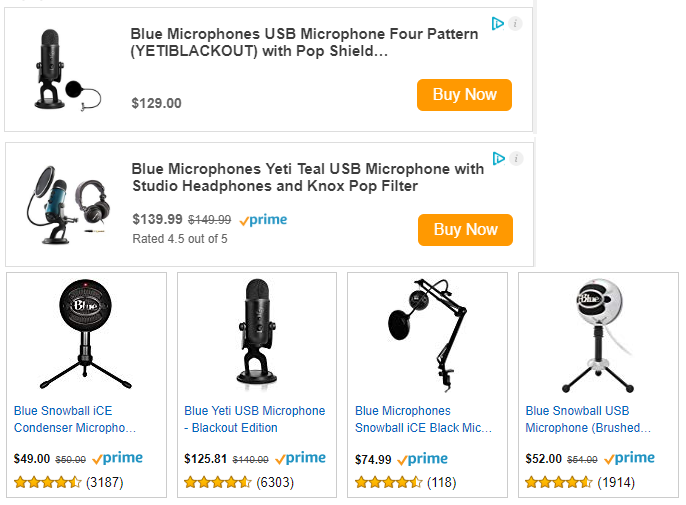
If you are wondering what Blue Microphone is, it is the company that produces some of the most commonly used condenser microphones among Twitch streamers, namely Snowball and Yeti.

We talk about very expensive products, the price of which can range from $ 60 to $ 4,000.

At this point Logitech is ready to create a line of peripherals dedicated to gamers and practically complete.

Before saying goodbye, we leave you to a short video through which the acquisition of Blue Microphone was announced.

Link to buy Blue and Yeti Microphones Below