Tag Archives: podcasting

As a Filipino Journalism or Masscomm Student, Should I Pursue a Career in Podcasting?

  • Is podcasting a suitable or great career for a Filipino who studies broadcast journalism or mass communication in the Philippines?
  • As a media practitioner, should a Filipino working as a radio broadcast find career and financial fulfillment when choosing podcasting?
  • For students, how can they start build a career in podcasting in the Philippines?
  • What skills are required to be proficient in podcasting? Is having a good communication skill enough? Will having a technical background in social media, the internet, programming and digitial audio production be advantageous?
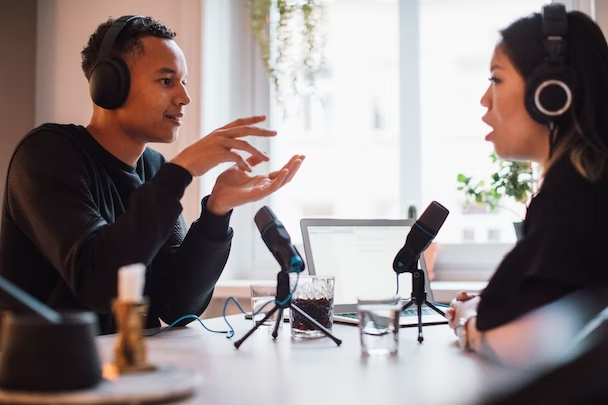
Podcasting is a form of audio content creation that has been growing in popularity and accessibility in recent years. Podcasts are typically episodic, on-demand, and distributed online via various platforms and apps. Podcasts can cover a wide range of topics, genres, and formats, from news and education to comedy and storytelling. Podcasting can be a suitable or great career for a Filipino who studies broadcast journalism or mass communication in the Philippines, depending on their goals, skills, and interests. In this essay, I will discuss some of the benefits and challenges of podcasting as a career, as well as some tips and resources for aspiring podcasters.

One of the benefits of podcasting as a career is that it can offer a lot of creative freedom and flexibility. Podcasters can choose their own topics, style, tone, and audience, as well as their own schedule and pace. Podcasters can also experiment with different formats and techniques, such as interviews, solo shows, co-hosted shows, live shows, scripted shows, etc. Podcasting can also be a way to express one’s passion, expertise, or perspective on various issues and subjects. Podcasting can also be a way to build a loyal and engaged community of listeners who share similar interests or values.

Another benefit of podcasting as a career is that it can be relatively low-cost and easy to start. Podcasting does not require a lot of expensive or complicated equipment or software. A basic podcast setup can consist of a microphone, a computer, an audio editing software, and a hosting service. There are also many free or affordable resources and tools available online for podcasters, such as tutorials, guides, courses, forums, directories, etc. Podcasting can also be done from anywhere with an internet connection, which can be convenient for remote work or travel.

However, podcasting as a career also has some challenges and drawbacks that need to be considered. One of the challenges of podcasting is that it can be very competitive and saturated. According to [Spotify](^4^), there are over 2 million podcasts available on its platform alone⁵, and the number is growing every day. This means that podcasters need to find ways to stand out from the crowd and attract and retain listeners. This can involve having a unique value proposition, a niche market, a consistent quality, a strong marketing strategy, etc.

Another challenge of podcasting is that it can be difficult to monetize and sustain. Podcasting is not a get-rich-quick scheme; it takes time, effort, and patience to build an audience and a reputation. Podcasting revenue streams can include advertising, sponsorship, subscription, donation, merchandising, etc., but they often depend on having a large or loyal fan base. According to [Podcast Insights], the average CPM (cost per thousand impressions) for podcast ads ranges from $18 to $25, which means that a podcast with 10,000 downloads per episode can earn around $200 to $250 per episode from ads alone. This may not be enough to cover the costs of production or living expenses for some podcasters.

Therefore, podcasting as a career may not be suitable for everyone. It may be more suitable for those who have a passion for audio content creation, who have a clear vision and goal for their podcast, who have the skills and resources to produce and promote their podcast effectively, and who are willing to invest time and money into their podcast without expecting immediate returns.

For students who want to start building a career in podcasting in the Philippines,

there are some steps they can take to prepare themselves for the industry. Some of these steps are:

– Learn the basics of podcasting. Students should familiarize themselves with the technical aspects of podcasting, such as recording equipment, audio editing software, hosting services, distribution platforms, podcast directories, analytics tools, etc. They should also learn the best practices of podcasting, such as planning, researching, scripting, interviewing, editing, publishing, marketing, etc. There are many online resources and courses that can help students learn these skills, such as [Podcasting for Beginners](^7^) by Buffer⁷, [How To Start A Podcast] by Pat Flynn, [Podcast Launchpad] by Buzzsprout, etc.

– Develop your voice and style. Students should practice their speaking skills and find their own voice and style for their podcast. They should consider their target audience, their niche topic, their tone, their format, etc. They should also listen to other podcasts that inspire them or that are similar to their desired genre or category. They should analyze what makes these podcasts successful or appealing and what they can learn from them.

– Create your own podcast. Students should start creating their own podcast as soon as possible to gain experience and feedback. They should choose a topic that they are passionate about or knowledgeable about or curious about. They should also choose a name and a logo for their podcast that reflect their brand and identity. They should record and edit their first episode and upload it to a hosting service such as [Anchor], [Podbean], [Libsyn], etc. They should also submit their podcast to various distribution platforms and directories such as [Spotify](^4^)⁴, [Apple Podcasts], [Google Podcasts], etc. They should also promote their podcast on social media, on their website or blog, on their email list, etc.

– Grow your audience and network. Students should continue to produce and publish new episodes of their podcast regularly and consistently to maintain and grow their audience. They should also engage with their listeners by asking for feedback, reviews, ratings, comments, questions, suggestions, etc. They should also network with other podcasters, especially those in the same niche or category, by joining online communities, forums, groups, events, etc. They should also collaborate with other podcasters by inviting them as guests, co-hosting shows, cross-promoting each other, etc.

– Monetize your podcast. Students should explore different ways to monetize their podcast once they have established a loyal and sizable audience. They should consider the various revenue streams available for podcasters, such as advertising, sponsorship, subscription, donation, merchandising, etc. They should also research the best practices and strategies for each revenue stream, such as finding the right advertisers or sponsors, creating compelling ads or pitches, setting the right prices or rates, providing value to their listeners or supporters, etc.

Podcasting is a skill that requires more than just having a good communication skill. While communication skill is essential for podcasting, it is not enough to create a successful podcast. Podcasting also requires other skills, such as:

– Technical skills. Podcasting involves using various types of technology and software to record, edit, upload, distribute, and analyze audio content. Podcasters need to have the technical skills to operate and troubleshoot these tools effectively and efficiently. Podcasters also need to have the technical skills to optimize their audio quality and sound design, as well as their SEO and metadata.

– Creative skills. Podcasting involves creating original and engaging content that attracts and retains listeners. Podcasters need to have the creative skills to come up with interesting topics, stories, formats, styles, etc. Podcasters also need to have the creative skills to express their personality, voice, and perspective through their audio content.

– Research skills. Podcasting involves providing accurate and reliable information and insights to listeners. Podcasters need to have the research skills to find and verify sources of information, data, facts, etc. Podcasters also need to have the research skills to analyze and synthesize information and present it in a clear and concise manner.

– Interview skills. Podcasting often involves conducting interviews with guests or experts on various topics or issues. Podcasters need to have the interview skills to prepare relevant and engaging questions, to establish rapport and trust with guests, to listen actively and attentively, to follow up with probing or clarifying questions, to manage the time and flow of the conversation,

etc.

– Marketing skills. Podcasting involves promoting and growing one’s podcast brand and audience. Podcasters need to have the marketing skills to identify and reach their target market, to create and execute effective marketing campaigns, to use various marketing channels and platforms, to measure and evaluate marketing results, etc.

Having a technical background in social media, the internet, programming, and digital audio production can be advantageous for podcasting, but it is not necessary or mandatory. These technical backgrounds can help podcasters improve their technical skills, as well as their creative skills, research skills, interview skills, and marketing skills. However, these technical backgrounds are not substitutes for these skills; they are only supplements or enhancers. Podcasters can still acquire these skills without having these technical backgrounds, as long as they are willing to learn and practice.

In conclusion, podcasting can be a suitable or great career for a Filipino who studies broadcast journalism or mass communication in the Philippines, depending on their goals, skills, and interests. 

Podcasting can offer many benefits, such as creative freedom, flexibility, expression, and community building. Podcasting can also pose some challenges, such as competition, saturation, monetization, and sustainability. 

Podcasting requires more than just having a good communication skill; it also requires technical skills, creative skills, research skills, interview skills, and marketing skills. Having a technical background in social media, the internet, programming, and digital audio production can be advantageous for podcasting, but it is not necessary.

Source: 

(1) Spotify : Philippines : Top Podcasts Podcast Charts – Chartable. https://chartable.com/charts/spotify/philippines-top-podcasts.

(2) Nine Filipino Fan Favorite Podcasts Join Spotify. https://newsroom.spotify.com/2020-09-22/nine-filipino-fan-favorite-podcasts-join-spotify/.

(3) The Complete Guide to Podcasting for Beginners – Buffer. https://buffer.com/library/podcasting-for-beginners/.

(4) The Complete Guide to Podcasting for Beginners – Buffer. https://buffer.com/library/podcasting-for-beginners/.

(5) Spotify : Philippines : Top Podcasts Podcast Charts – Chartable. https://chartable.com/charts/spotify/philippines-top-podcasts.

(6) Spotify : Philippines : Top Podcasts Podcast Charts – Chartable. https://chartable.com/charts/spotify/philippines-top-podcasts.

(7) 25 Pinoy-made Podcasts You Should Listen To – When In Manila. https://www.wheninmanila.com/25-pinoy-made-podcasts-you-should-listen-to/.

(8) 40 Best Philippines Podcasts You Must Follow in 2023 – Feedspot Blog. https://podcasts.feedspot.com/philippines_podcasts/.

(9) Here are the top 5 Filipino podcasts on Spotify | ABS-CBN News. https://news.abs-cbn.com/ancx/culture/spotlight/10/10/22/here-are-the-top-5-filipino-podcasts-on-spotify.

(10) 10 Podcasting Skills to Master to Take Your Podcast to the Next Level. https://weeditpodcasts.com/10-podcasting-skills-to-master-to-take-your-podcast-to-the-next-level/.

(11) Using podcasts to develop listening skills – TeachingEnglish. https://www.teachingenglish.org.uk/professional-development/teachers/integrating-ict/magazine/using-podcasts-develop-listening-skills.

(12) Podcast Producer Job: How to Become a Podcast Producer. https://www.masterclass.com/articles/podcast-producer-career-guide.

(13) Getty Images. https://www.gettyimages.com/detail/photo/podcast-studio-royalty-free-image/1132835815.


Redundant Podcast App from Google Search Results Ditched in Favor of YouTube Integration?

Google is not removing Google Podcasts in favor of YouTube Podcasts. According to a company spokesperson, “Google Podcasts continues to serve its many audio users around the world”[1]. However, YouTube is reportedly launching a new podcasting service called “YouTube Podcasts”[2], which could potentially replace Google Podcasts in the future. Google has also recently removed the feature that allowed users to access playable podcasts directly from the Google Search results[3], which could be an indication that they are shifting focus to YouTube Podcasts.

Sources:

  1. https://9to5google.com/2023/02/23/google-podcasts-youtube/
  2. https://arstechnica.com/ars-podcast/2021/10/youtube-podcasts-will-reportedly-be-the-next-piece-of-youtubes-media-empire/
  3. https://techcrunch.com/2023/02/07/google-winds-down-feature-that-put-playable-podcasts-directly-in-search-results/

YouTube, a Google subsidiary, is experimenting with podcasting and may officially embrace it in the near future. This test allows existing content to be marked as podcasts without manual conversion, giving uploaders access to performance, audience, and revenue data. The podcast content is also displayed on the dedicated Podcasts homepage on YouTube, which is currently only available in the US. Outside of the US, the podcast uploads are displayed as regular YouTube videos. The webpage also displays Google’s third iteration of the podcast logo, colored in blue instead of red.

This move follows the removal of Google Podcasts from Search results, indicating that YouTube may be the ultimate successor for Google Podcasts. As Chrome Unboxed points out, “YouTube is in a unique position to take over the podcasting space”. This could be a great opportunity for YouTube to expand its content library and become a major player in the podcasting industry.

The State of Podcasting, Revenue and Popularity in South East Asia

The podcast industry has seen tremendous growth in the past few years, and South East Asia is no exception. According to a report by Deloitte Insights, the podcast industry in the Asia Pacific region has grown far faster than the overall media and entertainment market. In particular, the Philippines is seen as the launching pad for podcast expansion throughout Southeast Asia.

The most popular podcasters in South East Asia are those who focus on storytelling and news. Ron Baetiong, the founder of Podcast Network Asia, is one of the most popular podcasters in the region. He is known for his storytelling and his focus on Filipino stories. Other popular podcasters in the region include those who focus on news, such as the South Asian Studies at Stanford (SASS) Podcast, which features conversations between the Center for South Asia at Stanford and guests a connection to Stanford.

The amount of money that podcasters can earn in South East Asia varies depending on the size of their audience and the type of content they produce. Generally, podcasters in the region can earn anywhere from a few hundred to a few month.

The most popular topics for podcasters based in South East Asia include news, politics, culture, business, and entertainment. For example, the South Asian Studies at Stanford (SASS) Podcast covers a wide range of topics, from poetry to politics, from manuscript collecting to music, from business to Bollywood. Similarly, Ron Baetiong’s Podcast Network Asia focuses on Filipino stories and culture. [1]

Overall, the podcast industry in South East Asia is growing rapidly, and there are many popular podcasters in the region who are making a living off of their content.

Sources:

  1. https://www.esquiremag.ph/money/movers/podcast-network-asia-a00304-20200108-lfrm2

Yes, podcasting can be a good source of income for those who work in the media industry. According to the Pew Research Center, the median wage in 2020 for news analysts, reporters and journalists in the radio broadcasting industry was about $49,000, while editors in the radio broadcasting industry had a median annual wage of about $79,000.[1] Additionally, the Interactive Advertising Bureau reported that self-reported podcast advertising revenue in the U.S. reached $257.4 million in 2017, achieving a Year-on-Year growth of 117%.[2]

The podcasting industry is still growing and is not yet saturated. According to Insider Intelligence, the number of monthly US podcast listeners will increase by 6.1% year-over-year (YoY) to 125 million in 2022.[3] This suggests that there is still room for new players to enter the podcasting industry.

Sources:

  1. https://www.pewresearch.org/journalism/fact-sheet/audio-and-podcasting/
  2. https://econreview.berkeley.edu/stay-tuned-to-the-podcasting-industry/
  3. https://www.insiderintelligence.com/insights/the-podcast-industry-report-statistics/

If you are an aspiring podcaster who lives in South East Asia, there are several strategies and topics to discuss in order to be successful in podcasting. Firstly, it is important to understand the podcast landscape in East and South East Asia. According to an article by Podnews, there is an independent podcast creative company based in Jakarta that produces podcasts in both English and Indonesian. This is a great resource to understand the podcast landscape in the region and to get ideas for topics and strategies to use in your podcast.

Secondly, it is important to have a clear strategy for your podcast. Forbes suggests that podcasters should measure success by following two key metrics: velocity of downloads and listener engagement. Additionally, they suggest that podcasters should focus on creating content that is unique, relevant, and engaging.

Finally, it is important to choose topics that are relevant to the region. The XA podcast is a great resource for understanding the early stage investing ecosystem in the region. Additionally, the GHOST MAPS podcast is a great resource for understanding true Southeast Asian horror stories.

Overall, understanding the podcast landscape in East and South East Asia, having a clear strategy for your podcast, and choosing topics that are relevant to the region are all important strategies for success in podcasting in South East Asia. [1]

Sources:

  1. https://podnews.net/article/podcasts-in-asia

New Cherry Americas Microphone Products for Podcasters, Streamers offer Function, Fair Pricing

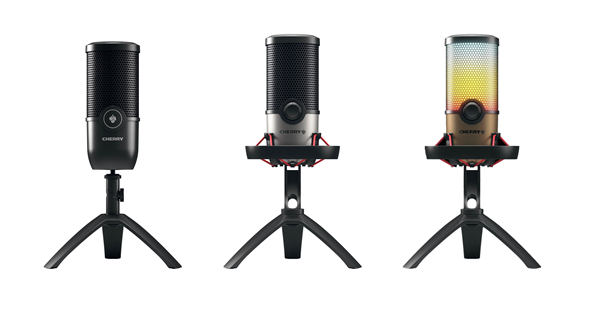
Cherry Americas, a division of the global leader in computer input devices, today announced the debut of the CHERRY UM Microphone Series, an innovative new portfolio of computer microphones and companion items for streaming and office usage. The introduction of the new product line signifies a significant extension of CHERRY’s product range into the field of sound and microphones.

CHERRY, the global leader in mechanical key switches and a pioneer and pacesetter in computer, office, and gaming input devices and accessories, is expanding its audio offering with three sleek new microphones for work and leisure. The CHERRY UM Microphone Series allows everyone, from novices to pro streamers, to expand their setups with distinctive designs and the highest audio recording quality available. The new product range is ideal for today’s computing environments, where communication and collaboration take place remotely and podcasts and live streaming are commonplace.

“We’re launching the CHERRY UM Microphone Series on Valentine’s Day because we’re confident people will love the exceptional quality, ease of use, and sleek design of these new audio products,” said Richard Simone, CEO of Cherry Americas. “CHERRY is recognized globally for high-quality products and innovation in computer input devices and components. We’re excited to bring those same enduring qualities to computer audio and microphones.”

Richard Simone, CEO of Cherry Americas

Three Fantastic New Microphones
The UM 3.0, UM 6.0 ADVANCED, and UM 9.0 PRO RGB USB microphones are ideal for a variety of applications, ranging from the office to the professional streaming studio. The microphones, which are made of high-quality components, provide ideal sound for virtual meetings.

These USB mics in the UM series are made to last and have appealing features that make them extremely easy to use. The microphones come with a solid metal stand, touch-to-mute feature, volume control right on the microphone, an integrated headphone port, and Plug & Play compatible with PC, Mac, PS4 and PS5.

The Office Microphone, CHERRY UM 3.0
The UM 3.0 has a scanning rate of 96 KHz and a bit depth of 24 bits and is intended for single-person use due to its directional cardioid capsule. It is ideal for home usage and produces great sound during video conferencing. The CHERRY UM 3.0 can also record podcasts, voiceovers, and musical instruments.

CHERRY UM 6.0 ADVANCED – A Flexible Option
The UM 6.0 ADVANCED has a choice of ‘cardioid’ or ‘omnidirectional’ polar patterns and can record inputs from two directions at 96 KHz and 24 bits. A shock mount function prevents sound distortion caused by vibrations by entirely decoupling the mic from the metal stand through robust rubber bands.

The Ultimate in Sound and Color Effects with the CHERRY UM 9.0 PRO RGB
With a scanning rate of 192 KHz and 24 bits, the UM 9.0 PRO RGB is the microphone for anybody who wants to get the most out of their recordings. With the stroke of a button, users may choose between the “cardioid,” “omnidirectional,” “bidirectional,” and “stereo” polar patterns, capturing audio sources exactly out of any desired direction.

More information is available online at: www.cherryamericas.com

1 in every 4 people are listening to podcasts in Germany

According to the BITKOM study, a quarter already hear podcasts – shorter posts are the most popular

Podcasts are still on the rise: One in four Germans (26 percent) say they hear such digital radio shows – in the previous year it was 22 percent. This is the result of a representative survey of more than 1,000 people, ages 16+, on behalf of the digital association Bitkom. So, every eleventh (9 percent) hears podcasts at least weekly, another 9 percent at least once a month. Especially young people like to access podcasts. More than one in three people between the ages of 16 and 29 (35 percent) indicates this. “Whether news, thrillers or relationship talks – the podcast offer is as big as ever and is constantly growing,” says Bitkom expert Dr. Sebastian Klöß, The vast majority of Germans, on the other hand, have not gotten the taste: 70 percent of respondents said they never hear podcasts.

Popular topics: news, film, television, sports, comedy

Particularly popular among podcast listeners are the news and politics (45 percent) and film and television (41 percent). Similarly many are interested in sports and leisure as well as comedy (each 38 percent). One in three (33 percent) likes listening to music podcasts, closely followed by the topics of science (29 percent) and education (28 percent).

For the duration of a podcast, the majority of listeners prefer short shows. Half (49 percent) say a podcast should ideally be between 5 and 10 minutes, and 5 percent like even shorter podcasts. A quarter (24 percent) likes programs with a length of between 10 and 15 minutes. For only 7 percent, the preferred duration is over 60 minutes. The average value is 13 minutes. “With the smartphone, podcasts can be heard very well on the way – for example, on the way to work. But podcasts are also popular in household chores or as a companion in sports, “says Klöß. But not all listeners endure until the end of the episode. Only two out of five (38 percent) say: I usually listen to podcasts completely.

Bitkom’s tech podcast is called “Ctrl-Alt-Del.” The interviews, talks and keynote speeches are about trends around the digitization of the economy and society. The podcast is available on Spotify, iTunes, Soundcloud, on all major podcast apps, and on the website www.bitkom.org/podcast .

Methodological note: The basis for the information provided is a representative survey conducted by Bitkom Research on behalf of Digitalverband Bitkom. 1,003 persons in Germany aged 16 and over were contacted by telephone. The questions were: “How often do you listen to podcasts?”, “What topics do you listen to podcasts?”, “How long is a podcast ideally so that you like to hear it?”, “Listen to podcasts usually completely or only partially ? “

Using the Spotify for Podcasters Platform Management Tool

Image result for spotify podcast

Spotify has announced the official debut of its new platform Spotify for Podcasters , at the moment, only in beta.

The new service will be clearly focused on the management of podcasts and related feeds.

The podcasts on the Spotify platform reach an audience of about 180 million listeners worldwide and the new tool announced will allow creators of this type of content to manage multiple aspects of their podcast: you can easily publish the different episodes, more easily reach a more listeners , consult the statistics on ratings divided by demographics, geographical position , involvement and appreciation of listeners.

The new platform of Spotify will increase its audience because it will make it possible to publish podcasts loaded on other platforms, simply by sharing the relevant RSS feed.

As anticipated, Spotify for Podcasters is currently only available in beta, accessible by going to https://podcasters.spotify.com/

Podcasting Will Eat Up Traditional Radio And It Is Inevitably Happening Now

The report released by Edison Research on the ratings of traditional radio and podcasting (in the United States) continues to elicit comments and reactions from experts in the field.

Among these, James Cridland, who calls himself "radio futurist" and is a consultant for radio companies and the theme lecturer, said on the feared possibility that podcasting could represent the gravestones of terrestrial radio broadcasts.

Cridland begins his analysis from a figure that seems comforting: the ratings of the Americans are still constituted for 58% by the radio (AM, FM, sat, platform, the latter, which in the USA actually coincides with Sirius XM) and only for 4% from podcasting.The same study by Edison enhances the growth of listening to Personal on Demand content, which would be duplicated in the last four years, but it is clear that the percentage is still unbalanced towards the radio.

According to Cridland, listeners of broadcasting and podcasting would follow very different patterns of behavior. Listening to the radio, in fact, would be a habit so ingrained to become automatic: turning it on is a gesture that we naturally do every time we get in the car, just like pressing the clutch at start; not to mention that still several Americans ( even if less and less, it must be said as a consequence of the disappearance of the FM stand-alone receivers ) have a radio-alarm clock on their bedside table.

Listening to the podcast, on the other hand, would be the result of a deliberate choice and, given that it is much more common than spoken content than music, the listener would dedicate his full attention to it. Cridland, moreover, differs from those who say that the diffusion of podcasts is facilitated by smart home speakers (recently disembarked in Italy), because listening would be preferred – says the expert – through headphones.

On the prevalence of the first of the two behaviors, the numbers speak clearly. But traditional radio can not be completely safe: Cridland moves the magnifying glass to another aspect of the report, which reveals how, among the people who listen to podcasts, a third one claims to have listened to at least one in the last 24 hours , while only 30% listened to the radio as well. In a nutshell, listening to podcasts could cannibalize the radio (assuming, of course, that both live under the same roof, assumed everything to prove).

According to the expert, however, the radios would not be so unprepared and would be implementing strategies both of content and based on advertising: the big players of the broadcast, in fact, would have started to place on the market in combination spaces in the broadcast and in the Personal Option Digital Casting (of which the term podcasting is acronym).

In terms of content, however, there are several broadcasters who produce podcasts " breaking up" their on-air transmissions (for example, UK’s Global which produces "best of podcast" of Radio X’s broadcast Chris Moyles Show), although this, according to Cridland, would lead to an underestimation of the potential of downloadable programs.

Ultimately, Cridland believes that the radio companies are still very far from perceiving the opportunity that podcasting makes for the radio market. The forecasts of the "futurologist" are those of non-broadcasting content, ie designed and structured for downloading only, because they are aimed precisely at "catching" that slice of consumers who are already orienting themselves for a listening behavior different from that of the listener. typical of the radio. (VD for NL)

Podcasting Is Here To Stay and Businesses Will Love It

Interest in podcasts has grown in recent years; according to Edison Research in fact 44% of people in the United States listened to a podcast at least once, while 26% did it at least once a month. But if podcasts could gain ground in cars or at home, they only did some limited raids in the workplace … at least so far. Nevertheless, some companies see new potential for audio streaming as a means of delivering on-demand content to staff , particularly for those with a large number of remote and mobile workers.

With this kind of interest in mind, the company video streaming provider uStudio has recently launched a podcast distribution platform that adds the necessary administrative controls, enterprise application integrations, security features and usage analysis provided by business managers and IT departments. (Similar solutions are also offered by podcast hosting providers like Podbean and Blubrry ).

UStudio’s CEO, Jen Grogono , said that companies get better and more effective communications with audio streaming and cited customers such as Fidelity Investments, Cintas and Salesforce, who implemented the uStudio platform for various purposes. These uses range from onboard personnel to up-to-date product information communicated to frontline sales people. "We see a growing need from companies that are trying to create content that they do not necessarily want to access the whole world," said Grogono.

For example, Salesforce has a suite of about six podcast broadcasts aimed at sales personnel, each with their own set of episodes. "They are really bringing podcasting to the next level," said Grogono. Technology in the workplace is often influenced by consumer trends, and Grogono said podcasting is no different than other typical workplace technologies.

"There are two trends at the base of the company demand at the moment: a turning point in the consumption of podcasts and audiobooks and a maturity in the creation of content combined with more accessible and mobile quality production tools" . Grogono said that access to analytics is essential for companies that decide to embrace podcasting.

An advantage that podcasts and other means of streaming keep on other types of documents is in fact the ability to collect data on the content to which the staff accesses. For example, the integration of data analysis related to the use of podcasts within a CRM system could show a correlation between access to podcasts and new sales representatives that generate revenue faster.

"You can also determine if, after watching or listening to one or two episodes of a podcast, salespeople are increasing their business or not, so as to understand the value of the content itself in ways we have never used in the past." There are other signs that show how the interest in using podcasts within organizations is increasing. According to Wayne Kurtzman of IDC, "corporate podcasts are in their early stages, but are slowly growing as a market".

"Companies have been slow to embrace this technology to date for a variety of reasons," said Jon Arnold , independent technology analyst and founder of J Arnold & Associates. "Although they can be useful for internal communications, the disadvantages are similar to those of corporate blogs. As with any communication platform, creating content that effectively involves the target audience, even if the public is a company’s workforce, is indeed a challenge ".

In the real world (and therefore not just enterprise or corporate) even the best podcasts can take a year to get a regular audience. "Remember that you are competing against all the other podcasts on the planet to get attention and visibility. Taking the time to make podcasts and create content targeted to the audience that adds value is still a determining factor in the success or failure of a podcast, " said Arnold.

An annual study conducted by the Gatehouse communication agency shows that only 18% of corporate respondents use podcasts, compared to 82% who use video tools instead. However, interest in podcasting remains rather high, with 57% of respondents (650 global communications executives) planning to increase investment in this area. Gatehouse CEO Simon Wright said the video largely eclipsed podcasts as a means of choice for office knowledge workers, but there is the potential to use podcasts as information providers to field workers, for example while they travel to reach their work destination.

"There is clearly a potential for this content," said Wright. "At the moment podcasting has not been exploited particularly well; organizations must find a solution to use it as a means of communicating information that people can learn when they are on the move. It has always been much easier to communicate with people sitting in front of their desks and it is always difficult to reach those people who are not connected. This is where podcasts will find their raison d’être: inform people on the move ".

Grogono also sees the potential of podcasts to workers who are often on the road. "Companies are launching private and secure podcasting channels so remote and field workers have access to content and information while on the go. As such, business leaders are learning that the efficiency and effectiveness of podcasts make audio a logical substitute for printing, such as traditional e-mail or PowerPoint documents analyzed on a PC. And the data produced by podcast audio streams is much more valuable than the print counterparts. "