The Hannah Montana girl is back with another promising hit – “Can’t Be Tamed” the first single to flagship her third and last album of the same title? Ahuh! Miley said after finishing this album, she is taking a break, accordingly to get “more inspiration”.
Her reason for the hiatus is so that she would have time to explore a variety of musical genres and grow up, along with her fans. – Wikipedia
That’s awesome! Or probably just a publicity stunt. But Cyrus predicts that her new album will be a great summer compilation. She adds her latest influences include Timbaland, Lady Gaga, and Britney Spears. Miley should really take a break after this album!
DJ Agent Mikey Bond Handles the Morning Show, NU 107 Cebu Beefs Up Radio Interaction with Video Streaming and Chat via Ustream
97.9 Love Radio and NU 107 Home New Rock are two stations now streaming video via UStream.tv. With the advent of online video streaming apps such UStream, radio stations are now able to broadcast not just audio but live video feed as well.
Mo Bounce is an evening DJ at WHTZ Z100 New York, the most copied fm radio station in the world. MO Bounce is married to a Filipina, so it is only but fitting that he gets to interview Charice.
Pop-RNB singer Jojo, who was recently in the country for a concert, shrugs a shoulder when asked about being compared to Charice Pempengco. Jojo said in an article that she is excited to see Charice’s career and she is cool with the International Filipino singer remaking a song original recorded by her.
The song “Note to God”, written by Dianne Warren, was given the first interpretation by Jojo in her 2006 album – “The High Road”.
“I thought it was interesting that they made her record a song that was already on someone else’s album. But she did an incredible job, and I have nothing but respect for her. I can’t wait to hear the rest of her album. I’m excited to watch her career,” JoJo said.
Lady Gaga Finds Greyson Chance A Talented Kid!
Lady Gaga finds the YouTube star Greyson Chance a talented kid, this she said in a live phone interview with Ellen Degeneres. Ellen, who is fond with meeting and interviewing internet stars, flew in the 12 year old web sensation to come over to her show. Chance performed Paparazzi, which earned him praises and criticisms.
Many find Greyson Chance a close match to Justin Bieber.
Eminem has always been explicit and self-centered in most of his songs. Self-centered in a good way that is, his songs are a like a window to the private life of this Grammy Award winning rap artist.
His latest hit song “Not Afraid”, lifted from the upcoming Recovery album did come as a shocker when it landed no. 1 on its Billboard Hot 100 debut. It’s 1 of only 2 rap songs that had hit number 1 on its release.
With the same feat that Eminem achieved, I can’t help but associate this song to our country’s recent policitical scene. After the Elections, the first automated that is, I have felt such a great deal of pride, a sense of victory, yet somehow there are hints of hesitation.
With the almost all of the returns already tallied , many of the young voters, whose bets weren’t doing well in the canvassing, demurred to the idea that a former President’s son is closing proclamation.
Many Presidential candidates have conceded, a good example to voters to settle down and except reality. The battle is not yet won, in fact, it hasn’t even gone half way. This is just the beginning.
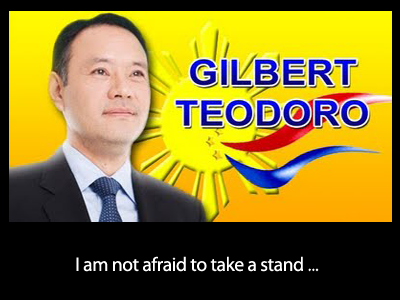
I’m not afraid to take a stand
Everybody come take my hand
We’ll walk this road together, through the storm
Whatever weather, cold or warm
Just let you know that, you’re not alone
Holla if you feel that you’ve been down the same road
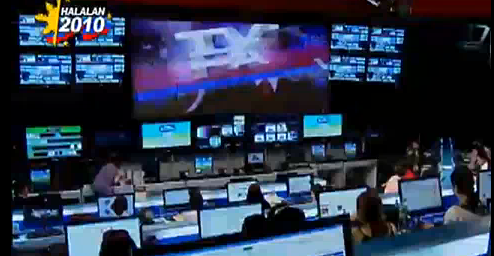
War Room ABS-CBN Headquarters for their Election Coverage
The two Philippine TV Network mammoths, ABS-CBN and GMA have recently showed their latest facility and technology to be used for their coverage on the Philippine Elections come May 10, 2010.
Large LED and LCD screens, multi live feed and touch screen systems, new OB Vans, satellite transreceivers, video cameras, and even iPads, are among the latest tools that both networks boast.
The Kapamilya Network, during TV Patrol last Friday, showed televiewers a sneak peek to its ‘War Room’ — the command center for their election coverage.
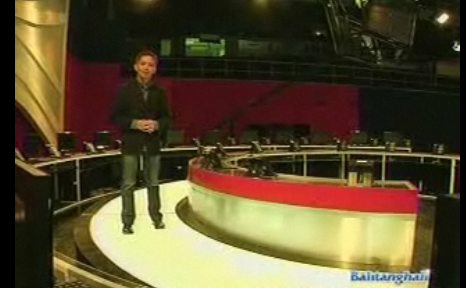
GMA 7, on other hand, showed off their high end coverage set, beefed up by its partnership with PLDT and SMART Telecommunications.
In the midst of this sophisticated setting, both networks, for the first time in Philippine TV, will be using augmented reality technology or AR. AR enhances the real and live video feed with 3D graphics that seem to interact with the real environment. AR makes the 3D graphics to move around as the camera switches angles, making it look like the 3D images are physically present.
AR has been used by major TV networks in the US like CBS, ABC, NBC, and FOX. But the use of advanced tools and non-traditional methods in election coverage is said to have been benchmarked by CNN, when it introduced hologram in the 2008 US Elections.
Hologram is a technology that beams images of a remote video feed by using complex light and camera technology. This is however different since the news anchor actually sees the holograph (beamed image) as opposed to AR.
ABS-CBN promises that the use of this new technology will bring new perspective in news delivery.
“The main idea here is to make our viewers look at things at a new light. 75 percent of what they remember is going to be the video that they see. And if it is presented to them in a way that peaks their interest, they’ll remember it”, explains Maria Ressa, ABS-CBN News and Current Affairs Head.
Set for GMA Elections Coverage
GMA 7 also stressed that above using top of the line tools, factual, straightforward, and unbiased news delivery is still their top priority.
“Talaga namang pinaghandaan at pinagkagastuhan namin ito. But more than anything else, kagaya nang nakagawian natin sa mga nakalipas na election coverage, ihahatid natin ang pinakapatas at walang kinikilingang pagbabalita”, assures Atty. Felipe Gozon, CEO, GMA Network, Inc.
Radio networks from the two giant broadcast firms have also amped their coverage activities by adopting citizen journalism. While radio continues to use basic technology, radio stations across the country have found cell phones to be the only high tech gadget they can employ.
TV Networks may have invested hugely in state-of-the-art broadcast technology, but in the end it is still the content that matters.
It’s less than a week to go before the elections, I am a TV junkie, and whenever big events take place, I would always turn on the TV at all times to keep abreast of the latest development. But for most us who will be on the streets to vote, there is little chance to sneak into TV coverage.
Radio will be my best resort. Despite visual absence, radio is powerful a medium in covering events like the elections. Unlike TV, where only limited areas can be covered, due to limitations on equipment such as camera, outside broadcast vans, radio can accommodate more reporters which translates to more areas covered, more reports, and more information for the people.
I will be voting in Mindanao, where I am registered, so it is important for me to know what is happening. Portability is another edge radio has. While you need to be stationary to watch elections coverage on TV, you can listen to radio while you are on the go using your cell phone or a media gadget.
The best thing about radio is that it’s local. Local content means relevant information to the listeners. I can’t think of a better medium that could help me keep in the loop on Monday.
As for its role in the elections, radio just needs to be straightforward, fair, and factual. We as listeners need to be vigilant though. Let’s be mindful of any bias exposure of candidates during the day of the elections. The COMELEC has been commissioned to supervise and neutralize media usage. But it cannot handle everything by itself. (Republic Act No. 9006 Section 6.4- 6.5)
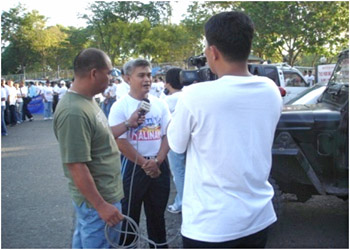
We can also participate in providing content to radio entities. In all radio networks across the archipelago, there have been volunteers commissioned to scoop, gather and deliver news reports. I have been privileged to participate in the 2004 coverage by a large broadcast network and experienced first hand feeding live situational report to the radio station.
With citizen journalism slowly becoming familiar to many Filipinos, in such recognizable programs on TV as Boto Mo iPatrol Mo and YouScoop, everyone can be a news agent.
Keep in handy a list of contact numbers of your local radio stations, just so, you have somewhere to call or go to in the event something breaking takes place.
On Monday, you cannot just be silent and deaf. If you what you see and what you hear is something of national significance and interest, let every one know.
Republic Act No. 9006 Section 6.4- 6.5
6.4. No franchise or permit to operate a radio or television station shall be granted or issued, suspended or cancelled during the election period.
In all instances, the COMELEC shall supervise the use and employment of press, radio and television facilities insofar as the placement of political advertisements is concerned to ensure that candidates are given equal opportunities under equal circumstances to make known their qualifications and their stand on public issues within the limits set forth in the Omnibus Election Code and Republic Act No. 7l66 on election spending.
The COMELEC shall ensure that radio or television or cable television broadcasting entities shall not allow the scheduling of any program or permit any sponsor to manifestly favor or oppose any candidate or political party by unduly or repeatedly referring to or including said candidate and/or political party in such program respecting, however, in all instances the right of said broadcast entities to air accounts of significant news or news worthy events and views on matters of public interest.
6.5. All members of media, television, radio or print, shall scrupulously report and interpret the news, taking care not to suppress essential facts nor to distort the truth by omission or improper emphasis.
They shall recognize the duty to air the other side and the duty to correct substantive errors promptly.
6.6. Any mass media columnist, commentator, announcer, reporter, on-air correspondent or personality who is a candidate for any elective public office or is a campaign volunteer for or employed or retained in any capacity by any candidate or political party shall be deemed resigned, if so required by their employer, or shall take a leave of absence from his/her work as such during the campaign period: Provided, That any media practitioner who is an official of a political party or a member of the campaign staff of a candidate or political party shall not use his/her time or space to favor any candidate or political party.
180 Minutes! Is it enough?
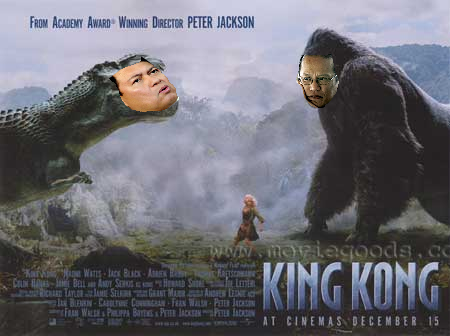
Radio airtime quota for nat’l candidates is as long as the ’05 King Kong Movie
Why do national candidates pour out a lot of money on radio ad campaigns? Radio, though, is second to TV, in terms of mass reach. But execution of strategies is limited, no visuals, no fancy graphics, no charm or “pa-cute” approach by celebrity endorsers, unless of course if the endorser’s voice is THAT recognizable.
But why bank on a medium where there is little to make?
As most giant brands are doing, putting ads on radio is as serious as putting 30 seconders on TV. Radio ads are a good follow up to TV campaigns. Radio is everywhere; people listen to radio while on a jeepney, inside a department store or at work.
According to a report by Geovisual Solutions Inc, NRS 2007, radio reaches 90.1% of the listening population aged 13 to 65 years old. In fact, each day of the week, we Filipinos listen more to radio than we do watch TV. On average, listeners tune in to radio for more than an hour and three quarters ( 1 ¾ hours). Filipinos watch TV at an average of 45 minutes each day of the week only.
No question on the viability of radio as advertising medium. However, Resolution No. 8758 on the Fair Elections Act states that presidentiables, particularly, are allowed only 180 minutes total of radio air time usage, for their political campaigns, covering the campaign period from February 9 to May 8, 2010 (3 months).
180 minutes is just like watching the 2005 King Kong remake, if that length was summed up into a movie. But this is radio, we’re talking about audio here. And that 180 minutes is chopped down into spots. 1 spot is equivalent to 1 length or run of a radio ad material, it can be 15 seconds long, 30 seconds, or 60 seconds.
you should be hearing 4 spots per day for every presidentiable
How effective, let alone cost effective, is 180 minutes?
180 minutes = 10,800 seconds of air time
10,800 seconds = 360 thirty-second long radio spots
360 thirty-second spots divided by 3 months = 120 thirty-second spots per month
120 thirty second spots per month divided by 30 days = 4 thirty-second spots per day
With the calculations above, you should be hearing 4 spots per day for every presidentiable, assuming that it’s all 30 seconders and assuming that they are all using up their 180-minute quota.
Is that frequency enough? All 9 presidentiables are competing for that precious one hour and three quarters each day.
They should be doing more than the 180-minute allocation. In fact, some candidates have devised a strategy by including themselves in their senators’ ads.
In the 2004 elections, Ping Lacson paid a radio network in Northern Mindanao to help in his campaign
How about paid radio interviews? Are they not counted as a radio ad campaign? A candidate is using radio airtime and is paying for it. Radio networks are not refusing payment for interviewing candidates, that’s money. Why should you turn your back on money?
Radio airtime is a public property. Radio stations do not own it. In fact, they pay the government to use OUR airwaves to make money. And nothing can be more harassing, than while you are listening to your favorite radio drama, suddenly a paid interview for a presidentiable cuts it off.
Politicians can also hire radio people. In fact, a candidate can pay a radio network, and use all its man power for his benefit. In the 2004 elections, Ping Lacson paid a radio network in Northern Mindanao to help in his campaign.
For a campaign strategy that only grabs the ear, politicians will do everything they can to grab not only your ear but your vote as well. Only a few of the presidentiables right now have the fiscal power to implement a campaign strategy that goes way beyond reaching you through radio. So always be aware of what your ears might be hearing.
Inasmuchas we don’t want to pollute our sight with ugly and misplaced political posters, let’s be responsible in using and lending our precious airtime.
Filipinos are always known for its resilience. I want to geographically point that the country has always been a target of the most trying situations. The Philippines is facing the Pacific Ocean in the east, making it prone to typhoons and storms. And we’re rubbing elbows with the most diverse and hostile cultures in the north, west, and south. The Philippines is like the Israel of the middle east.
Since I’m a radio blog, I’d like to share the story of RadioPilipinas. com. It’s another internet radio station, yeah, but once you hear their story, fingers crossed, you won’t look at internet stations the same way again.
I salute the pioneers, the brains, and the hands behind RadioPilipinas.com, for surviving such an economically challenging internet radio industry, all for the love of music, great love for Original Pilipino Music.
Radiopilipinas started in 2005. It was first called Fatalradio. The internet radio was a partnership of young american djs in USA and filipino djs in the Philippines. The 24 hour streaming time was divided into 12 hours for the USA and 12 hours for the philippines. Each would broadcast during daytime of their respective timezone. The main organizers of fatalradio were Jamez Strickland, Jake Williams, Michael Walker, Nolit Abanilla and Alexis Moreno.
The american side played mostly hiphop and alternative music. Among its regular djs include the brother of Evenesense drummer who also has his own band. The Philippine side on the other hand played mostly pinoy rock of the 90s as well as new wave stuff. Kuyakurt was the main dj for the filipino stream. The filipino partners took charge of designing and managing the site while the american partners did the technical as well as financed the radio.
Towards the end of 2005, cultural differences and persistent tug of war on streaming time brought out a split in Fatalradio. The american partners decided to setup a new radio of their own. The filipino staff went on streaming with Fatalradio until financial issues forced the server to shut down. In 2006, fatalradio continued to stream from an unstable free shoutcast server. However this was limited to a few listeners thus marketing the radio was futile.
In 2007, kuyakurt and nolit decided to revamp the internet radio and decided to name it radiopilipinas. Jeffrey McAdder financed the acquisition of the domain and nolithosting provided the site. Getting a new dedicated shoutcast server was hard as financial issues continue to plaque the staff. So the staff decided to run its site with a simple player of serverside mp3 files and let the listeners choose from a playlist whatever they want to play. The staff still continued on using the free shoutcast server with limited listener capacity from time to time.
Towards the end of 2008, nolithosting has acquired the ownership of radiopilipinas domain and got a shoutcast server installed in one of its collocated computers on a datacenter in dallas, USA. The new development paved the way for kuyakurt and nolit to redevelop radiopilipinas as a full internet radio running on shoutcast server. Radiopilipinas is currently running on one source server with two backup servers all running on state of the art centovacast software. A total of 4 relay servers are also running – three are on 64kbps with hundreds of listener capacity. One server is on 32kbps which is intended for listeners with dial up connections. This server runs on a random playlist not synch with the main server but of similar content.
Staff
Radiopilipinas is run by a handfull of staff with the following officers:
Alexis Moreno – Station Manager
Nolit Abanilla – Program Director
Wayne Perez – Research & Development Coordinator
Wendel Quinto – Events Coordinator
Chi Asprec – Technical Officer



 Radio Online Now