All posts by RadioOnlineNow

Why you can’t mention “Shopee” but “orange app” only on TikTok and Facebook

Social media creators and online sellers are increasingly resorting to coded language, referring to e-commerce giant Shopee as the “orange app,” to avoid potential negative consequences on platforms like TikTok and Facebook. This practice stems from a combination of explicit platform policies and a widespread belief in algorithmic penalties, often referred to as “shadowbanning.”

The primary driver behind this trend is the competitive landscape of social commerce. As platforms like TikTok invest heavily in their own e-commerce features, such as TikTok Shop, they are actively working to keep users and transactions within their ecosystem.

On TikTok, the restrictions are more explicit. The platform’s community guidelines and policies for creators, particularly those engaging in commercial content and live streaming, discourage or outright penalize the direction of traffic to external websites, especially competing e-commerce platforms. Mentioning “Shopee” or including links to the platform in captions or on-screen text can lead to reduced visibility of a creator’s content. In markets where TikTok Shop is available, the platform has a vested interest in promoting its own service over rivals.

For Facebook, the situation is more nuanced and often described by creators as “shadowbanning.” While there isn’t a clear-cut rule from Meta (Facebook’s parent company) that prohibits mentioning “Shopee,” there is a strong belief within the creator community that the platform’s algorithm demotes posts containing external links to competitor sites. The rationale is that Facebook, like TikTok, aims to maximize user time on its platform. By penalizing content that directs users away, they can maintain engagement and ad revenue.

This has led to a form of self-censorship among creators who rely on these platforms for their livelihood. To avoid their content being suppressed by the algorithm, they use veiled terms like “orange app” (referencing Shopee’s brand color) and “blue app” (for Lazada). This allows them to direct their followers to their online stores on these platforms without explicitly naming them and risking a potential decrease in reach.

In essence, while the term “shadowban” is not officially acknowledged by these platforms, the impact on creator behavior is real. The fear of suppressed reach and the desire to maintain visibility in a competitive digital landscape have given rise to this creative, albeit necessary, workaround. As social media platforms continue to evolve into integrated shopping destinations, the tension between content creation and e-commerce competition is likely to persist, making the “orange app” a fixture in the online lexicon for the foreseeable future.

Sources:

Beyond the Slop: Elevating Radio Copy in the Age of Generative Writing

Generative writing tools have become indispensable in modern content creation. They offer speed, scalability, and a baseline of coherence. But in radio—where every word must cut through noise and evoke emotion—generative writing can quickly devolve into slop: repetitive, cliché-ridden copy that erodes brand distinctiveness and listener engagement.

This article explores the risks of generative monotony and offers practical strategies to maintain originality, relevance, and impact in your radio advertising and branding scripts.

The Problem with Generative Slop

Generative slop occurs when AI-generated copy:

  • Relies on overused phrases (“no fluff, no flop,” “your number one hit station”).
  • Mimics competitor language due to shared training data.
  • Lacks emotional nuance, cultural specificity, or brand personality.
  • Feels templated, generic, or disconnected from the station’s identity.

In an industry built on immediacy and intimacy, sounding like everyone else is a creative failure.

Strategic Ways to Prevent Generative Slop

  1. Start with Human Insight

Begin your copywriting process with a clear understanding of your audience, brand tone, and campaign goals. Use generative tools only to enhance—not replace—your original thinking.

  1. Use Generative Tools as a Drafting Assistant

Instead of asking AI to write your entire script, prompt it to:

  • Rewrite your draft with improved rhythm or clarity.
  • Offer alternative phrasings for a single idea.
  • Suggest metaphors, analogies, or stylistic flourishes.

This keeps the core message intact while adding creative variation.

  1. Avoid Overused Templates and Buzzwords

Train your ear to spot and eliminate phrases that feel recycled or trend-chasing. Examples include:

  • “We’ve got you covered.”
  • “All the hits, all the time.”
  • “Streaming now, wherever you are.”

Replace these with language that reflects your station’s unique voice and values.

  1. Crowdsource Copy Ideas

Engage your listeners through social media polls, comment threads, or hashtag challenges. Ask:

  • “What’s a phrase that describes our station?”
  • “How would you promote our morning show?”

Use top responses as inspiration or direct input. This not only diversifies your creative pool but strengthens audience connection.

  1. Build a Copy Archive

Maintain a database of past scripts, taglines, and promos. Review them regularly to:

  • Avoid repetition.
  • Identify successful phrasing patterns.
  • Track the evolution of your brand voice.

This internal resource helps ensure consistency while encouraging innovation.

  1. Collaborate with Writers and Producers

Even if you use generative tools, involve human creatives in the final review. A skilled writer or producer can:

  • Spot tonal mismatches.
  • Refine pacing and structure.
  • Inject personality and emotional resonance.

Think of AI as a tool, not a substitute for creative judgment.

  1. Customize Your Prompts

If you do use generative writing, tailor your prompts to reflect your station’s identity. For example:

  • “Write a 15-second promo for a youth-oriented station in Cebu with a playful tone and local slang.”
  • “Create three variations of a morning show intro that emphasize energy and warmth.”

Specific prompts yield more relevant and usable output.

  1. Limit the Use of Trend-Driven Language

Avoid leaning too heavily on viral keywords, slang, or generational tropes unless they align authentically with your brand. Trying to sound “Gen Z” or “hyper-viral” can backfire if it feels forced or out of touch.

  1. Test Copy with Real Audiences

Before finalizing a script, test it with a small listener group or internal team. Ask:

  • Does this sound like us?
  • Is it memorable?
  • Would you tune in after hearing this?

Feedback helps refine tone and impact.

The Role of Delivery

No matter how well-written a script is, its effectiveness hinges on delivery. Invest in professional voice talent who understand pacing, tone, and emotional nuance. Match vocal style to format and direct sessions with clarity and intention. A great voice can elevate even simple copy into something unforgettable.

Conclusion

Generative writing tools are here to stay, but originality remains the cornerstone of effective radio branding. By combining strategic use of AI with human creativity, listener engagement, and professional delivery, stations can avoid the trap of generative slop and craft messaging that truly resonates.

Thailand’s Radio Revolution: Why the Frequency Shake-Up Signals a Brighter Future for Asia’s Airwaves

This week, a wave of transformation is rolling through Thailand’s radio landscape—and while the headlines may read like a shake-up, there’s an exciting undercurrent that signals growth, modernization, and long-overdue innovation not just for Thailand, but for Asia’s community broadcasting as a whole.

A Turning Point for Community Radio

The National Broadcasting and Telecommunications Commission (NBTC) has announced a dual-pronged reform:

  1. Over 3,900 community radio stations must transition to a new licensing regime or go off the air by the end of 2025.
  2. An FM analogue frequency auction will take place starting mid-2025, giving 2,500+ stations a chance to bid for a formal, standardized slot in Thailand’s broadcast ecosystem.

Critics worry this could silence smaller voices. But from a broader lens, this reform might actually amplify them—by creating a more equitable, professional, and future-ready space for community radio to evolve.

Embracing Digital Audio Broadcasting (DAB)

One of the most promising aspects of this reform is Thailand’s move toward Digital Audio Broadcasting (DAB). Analog systems have long been plagued by interference and inconsistent reach. With DAB, the nation’s airwaves get a long-overdue facelift—offering better sound quality, expanded station capacity, and a far more efficient use of the spectrum.

This digital shift mirrors trends already happening across Asia—from Japan’s HD Radio experiments to South Korea’s success with DMB (Digital Multimedia Broadcasting). Thailand is not lagging behind—it’s leaping forward.

Why This is a Win for Asia’s Broadcast Culture

This moment offers a template for modernization that other nations in the region can observe and adapt. Here’s why this is ultimately a positive step:

  • Legitimacy Through Licensing: The new auction process means stations will operate legally, with clearer standards for content quality and broadcast ethics.
  • Technological Leap: Digital broadcasting opens doors to more inclusive, mobile-friendly platforms. Expect to see content creators leverage apps, web streaming, and AI tools to stay relevant.
  • Revival of Local Storytelling: Ironically, the stricter licensing might encourage more intentional and professional grassroots storytelling—with better funding, training, and structure behind each broadcast.

From Airwaves to Innovation

This isn’t just a regulatory change—it’s a cultural one. While the transition won’t be without challenges, it opens the doors for bold, entrepreneurial minds to step in, reimagine content creation, and define what community radio means in the digital age.

In a region where radio remains a vital source of information, connection, and culture, Thailand’s reforms could be the spark that lights up a smarter, stronger radio future—for Asia and beyond.


Brandy Jingles: Crafting Soundscapes That Resonate Across Borders

Brandy Jingles, a prominent name in European radio branding, is making waves across international markets by blending artistic excellence with technical precision. With a passion for sound and a deep understanding of radio dynamics, their team of media professionals offers tailor-made audio solutions that enhance brand identity in powerful, creative ways.

For stations across Asia seeking to modernize their imaging without losing cultural authenticity, Brandy Jingles brings a refreshing approach. They work closely with radio professionals—DJs, producers, and station managers—to understand the flow of programming and audience preferences. Their creations are designed not only to sound compelling but to fit seamlessly between tracks and promos, elevating both mood and message.

Each project is treated as a collaborative journey: the pursuit of the perfect voice, the ideal rhythm, and the most meaningful tone to help a station connect more deeply with its listeners. It’s this commitment to quality and cultural relevance that makes Brandy Jingles a trusted partner in radio branding—no matter where in the world the dial lands.

Visit the website and learn more at https://www.brandy-jingles.com/about

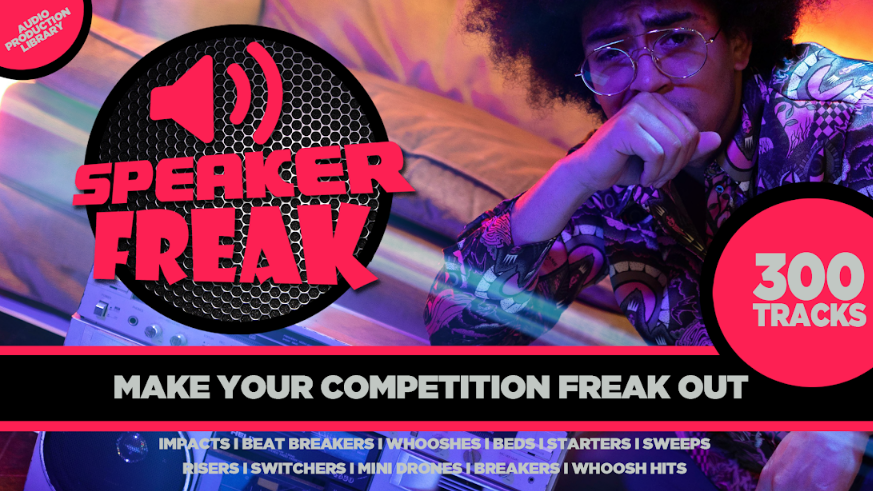
Speaker Freak – Audio Branding That Breaks the Rules from StickyFX

Unleash the power of sound with Speaker Freak—the ultimate FX, Work Parts, and Beds collection designed to make your competition sweat. Featuring 300 fresh, high-impact audio elements, this library is built for creators who refuse to settle for background noise.

Speaker Freak packs a punch with bone-rattling Impacts, speed-driven Starters, and fluid Whooshes, Risers, and Sweeps to elevate your production. Need to break up the mix? Switchers, Breakers, and Beat Breakers add the perfect edge, while Mini Drones create a dramatic foundation for your voiceovers.

Take your sound further with five Beds in diverse musical styles, each available in eight customizable mixouts—from Full Mix to Jingle Mix to Shotgun Mix. Plug in, play, and shape your station’s identity with effortless precision.

Speaker Freak isn’t just audio—it’s an attitude. It’s designed for radio imaging directors, podcast producers, and content creators who want their sound to punch through speakers and demand attention.

Ready to disrupt the airwaves? Download Speaker Freak now: StickyFX.com https://www.stickyfx.com/speaker-freak.html

Check out the audio demo: SoundCloud https://soundcloud.com/stickyfx/speaker-freak-demo

Should I Keep Spotify? The Struggle of Having Too Many Music Subscriptions

Like many music lovers, I’ve found myself tangled in a web of streaming services. Right now, I have three major subscriptions: Apple Music, YouTube Music, and Spotify. And honestly, I think I need to prune at least one.

But here’s the problem—each of these services is tied to something important in my life.

The Breakdown of My Subscriptions

• Apple Music – This comes bundled with my Apple One subscription, which includes iCloud, Apple Arcade, and Apple TV. Since it’s a family plan, removing Apple Music isn’t an option.

• YouTube Music – This is part of my YouTube Premium subscription, which I absolutely need for work, research, and business. Also a family plan, so it stays.

• Spotify – The odd one out. Unlike the other two, it’s a standalone subscription. The easiest to remove… but also the cheapest at just ₱129 per month compared to the other two, which are over ₱500 each.

At first glance, the obvious answer seems to be cutting Spotify—but here’s why it’s not that simple.

Why I Struggle to Let Go of Spotify

1. AI DJ & Personalization – One of my favorite features on Spotify is AI DJ. It’s not just another algorithm—it curates songs in a way that feels almost too good. While Apple Music and YouTube Music have their own recommendation engines, they don’t quite replicate this experience.

2. Years of Playlists – My Spotify playlists date back years, and while I can transfer them to other services, I’m attached to the way I’ve organized my music over time. It’s like a digital mixtape collection that I’ve built over the years.

3. Third-Party App Integration – This is a big one. I use certain apps—like DJ mixing software—that allow me to log in with music streaming services via API. If Apple Music or YouTube Music aren’t supported, Spotify becomes my only backup.

4. It’s the Cheapest Option – Financially, removing Spotify wouldn’t save me much. I’d only be cutting ₱129 per month, which isn’t a huge deal compared to the ₱1,000+ I’m already spending on music and video subscriptions.

The Final Decision: Should I Keep Spotify?

At this point, I’m at a crossroads. On one hand, removing Spotify makes sense because I already have two other music apps. On the other, Spotify offers unique advantages that neither Apple Music nor YouTube Music can fully replace.

So here’s my plan: I’m going to test life without Spotify for a month.

I’ll rely only on Apple Music and YouTube Music and see if I truly miss Spotify’s AI DJ, my old playlists, or the third-party app integrations. If I feel like something’s missing, then I’ll know that Spotify deserves to stay.

But if I barely notice its absence? Then it’s time to say goodbye.

What do you think? Would you keep Spotify in my situation, or is it time to move on? Let me know in the comments!

Waves of Change: Radio Gema Randik Welcomes Intan Heldiana Putri as PWI Muba’s First Female Leader

Intan Heldiana Putri Becomes the First Female Leader of PWI Muba

A historic milestone has been achieved in South Sumatra Province as, for the first time, a woman takes the helm of the Indonesian Journalists Association (PWI). Intan Heldiana Putri, SIP., has been officially appointed as the Chairperson of PWI Muba for the 2025-2028 term.

In an exclusive podcast on Radio Gema Randik, hosted by Elisa Aniwana on Monday (March 24, 2025), Intan reaffirmed her commitment to uniting PWI Muba and enhancing the professionalism of journalists in Muba Regency.

Herryandi Sinulingga, Head of the Communication and Information Technology Office (Kominfo) of Muba Regency, expressed his appreciation and support for Intan’s leadership. “Congratulations and best wishes to the new Chairperson of PWI Muba. PWI Muba plays a vital role in creating a healthy and accurate information ecosystem in Muba Regency. I urge all media professionals to collaborate with local governments in combating misinformation and hoaxes that threaten societal harmony,” he said.

Herryandi also encouraged all PWI Muba-affiliated media to register with the Press Council to bolster credibility and professionalism in reporting. “With a strong synergy between PWI Muba, the media, and the local government, we can establish a healthier, more accurate, and beneficial information environment for the community. Let’s build a more progressive Muba through quality journalism,” he emphasized.

The new leadership at PWI Muba is expected to bring fresh energy to journalism in Muba Regency while strengthening the role of media in delivering objective and reliable information.

“Best of luck, PWI Muba! Together, let’s fight hoaxes and build a better information ecosystem,” he concluded.

Leveraging TikTok for Radio Show DJs: Amplify Your Reach and Engagement


If you haven’t jumped on the TikTok bandwagon yet, you’re missing out on a whole new world of fun and engagement. Here’s how you can use TikTok to take your radio show to the next level.

Create Cool Content

TikTok is all about quick, eye-catching videos. Use it to give your listeners a peek behind the curtain with some behind-the-scenes shots, funny moments, and snippets of your live shows. These little teasers can draw people in and make them want to tune into your radio show.

Join the Fun Trends

TikTok is full of crazy challenges and trends that go viral. Why not join in? Create your own challenge related to your show or jump on an existing trend. Maybe a dance-off to the latest hit you played or a fun hashtag game. Get your listeners involved and watch the engagement skyrocket!

Go Live and Chat

One of the best things about TikTok is the live feature. Go live to chat with your fans, answer their questions, and get some real-time feedback. This kind of interaction can make your listeners feel like they’re part of the show, which is pretty awesome.

Show Your Personality

TikTok’s algorithm loves content that resonates with viewers. Use this to your advantage by showing off your unique personality, music tastes, and style. Share personal stories or funny anecdotes from your career. Building a personal brand can help turn casual listeners into loyal fans.

Wrap-Up

TikTok isn’t just for teens and dance videos—it’s a powerful tool for DJs to connect with their audience. By creating cool content, joining in on trends, interacting live, and showing your personality, you can boost your radio show’s reach and engagement. So, get creative and start TikToking!