
Category Archives: Radio News

Thailand’s Radio Revolution: Why the Frequency Shake-Up Signals a Brighter Future for Asia’s Airwaves

This week, a wave of transformation is rolling through Thailand’s radio landscape—and while the headlines may read like a shake-up, there’s an exciting undercurrent that signals growth, modernization, and long-overdue innovation not just for Thailand, but for Asia’s community broadcasting as a whole.

A Turning Point for Community Radio

The National Broadcasting and Telecommunications Commission (NBTC) has announced a dual-pronged reform:

  1. Over 3,900 community radio stations must transition to a new licensing regime or go off the air by the end of 2025.
  2. An FM analogue frequency auction will take place starting mid-2025, giving 2,500+ stations a chance to bid for a formal, standardized slot in Thailand’s broadcast ecosystem.

Critics worry this could silence smaller voices. But from a broader lens, this reform might actually amplify them—by creating a more equitable, professional, and future-ready space for community radio to evolve.

Embracing Digital Audio Broadcasting (DAB)

One of the most promising aspects of this reform is Thailand’s move toward Digital Audio Broadcasting (DAB). Analog systems have long been plagued by interference and inconsistent reach. With DAB, the nation’s airwaves get a long-overdue facelift—offering better sound quality, expanded station capacity, and a far more efficient use of the spectrum.

This digital shift mirrors trends already happening across Asia—from Japan’s HD Radio experiments to South Korea’s success with DMB (Digital Multimedia Broadcasting). Thailand is not lagging behind—it’s leaping forward.

Why This is a Win for Asia’s Broadcast Culture

This moment offers a template for modernization that other nations in the region can observe and adapt. Here’s why this is ultimately a positive step:

  • Legitimacy Through Licensing: The new auction process means stations will operate legally, with clearer standards for content quality and broadcast ethics.
  • Technological Leap: Digital broadcasting opens doors to more inclusive, mobile-friendly platforms. Expect to see content creators leverage apps, web streaming, and AI tools to stay relevant.
  • Revival of Local Storytelling: Ironically, the stricter licensing might encourage more intentional and professional grassroots storytelling—with better funding, training, and structure behind each broadcast.

From Airwaves to Innovation

This isn’t just a regulatory change—it’s a cultural one. While the transition won’t be without challenges, it opens the doors for bold, entrepreneurial minds to step in, reimagine content creation, and define what community radio means in the digital age.

In a region where radio remains a vital source of information, connection, and culture, Thailand’s reforms could be the spark that lights up a smarter, stronger radio future—for Asia and beyond.


Waves of Change: Radio Gema Randik Welcomes Intan Heldiana Putri as PWI Muba’s First Female Leader

Intan Heldiana Putri Becomes the First Female Leader of PWI Muba

A historic milestone has been achieved in South Sumatra Province as, for the first time, a woman takes the helm of the Indonesian Journalists Association (PWI). Intan Heldiana Putri, SIP., has been officially appointed as the Chairperson of PWI Muba for the 2025-2028 term.

In an exclusive podcast on Radio Gema Randik, hosted by Elisa Aniwana on Monday (March 24, 2025), Intan reaffirmed her commitment to uniting PWI Muba and enhancing the professionalism of journalists in Muba Regency.

Herryandi Sinulingga, Head of the Communication and Information Technology Office (Kominfo) of Muba Regency, expressed his appreciation and support for Intan’s leadership. “Congratulations and best wishes to the new Chairperson of PWI Muba. PWI Muba plays a vital role in creating a healthy and accurate information ecosystem in Muba Regency. I urge all media professionals to collaborate with local governments in combating misinformation and hoaxes that threaten societal harmony,” he said.

Herryandi also encouraged all PWI Muba-affiliated media to register with the Press Council to bolster credibility and professionalism in reporting. “With a strong synergy between PWI Muba, the media, and the local government, we can establish a healthier, more accurate, and beneficial information environment for the community. Let’s build a more progressive Muba through quality journalism,” he emphasized.

The new leadership at PWI Muba is expected to bring fresh energy to journalism in Muba Regency while strengthening the role of media in delivering objective and reliable information.

“Best of luck, PWI Muba! Together, let’s fight hoaxes and build a better information ecosystem,” he concluded.

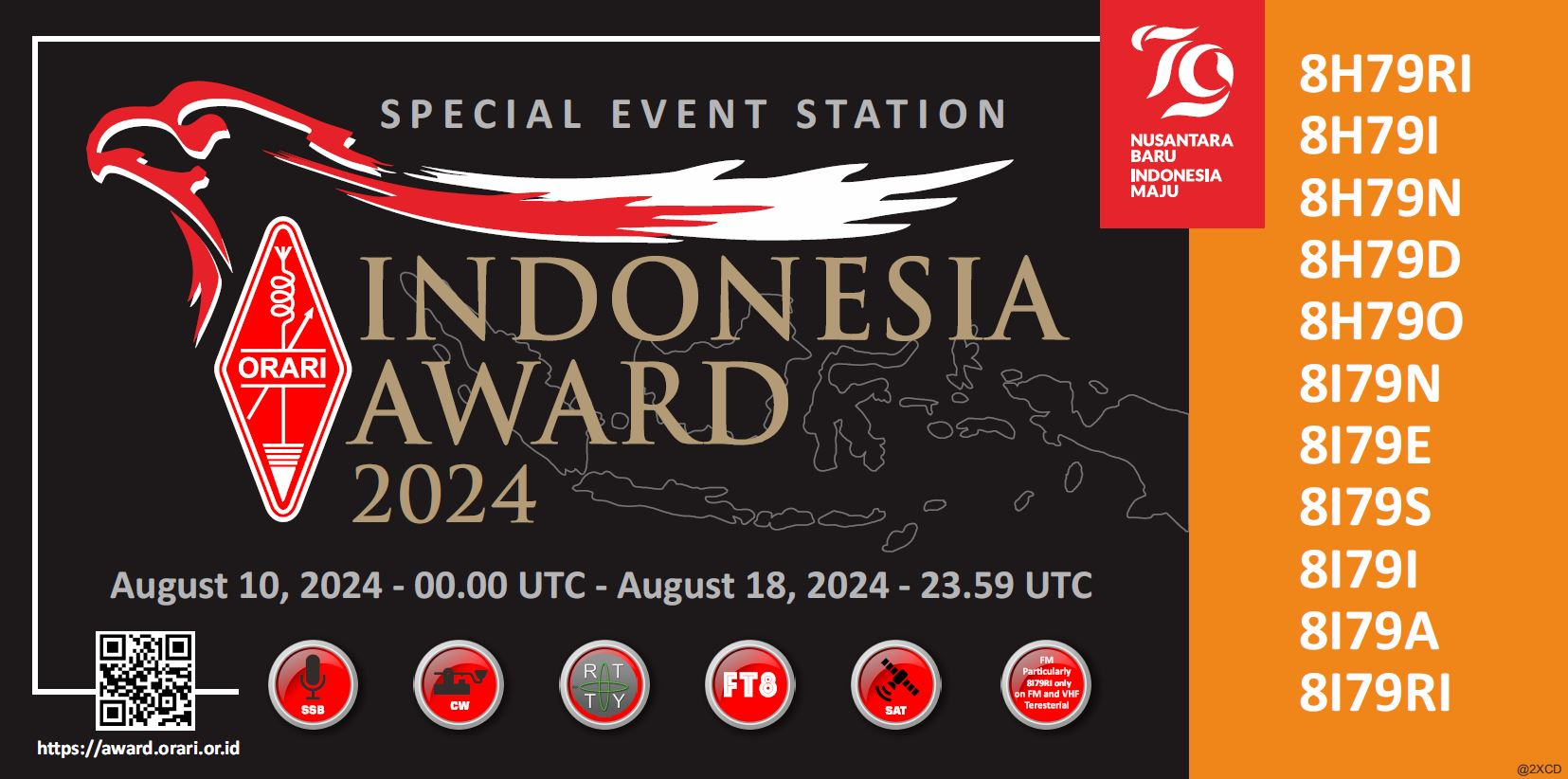
ORARI (Organisasi Amatir Radio Indonesia) Celebrating Excellence: Indonesia Award 2024 in Amateur Radio

Amateur radio enthusiasts in Indonesia will come together to celebrate their passion and achievements for the Indonesia Award 2024, hosted by ORARI. The event will take place from August 10 to August 18, 2024, and will showcase the remarkable contributions of radio operators across the country.

The Amateur Radio Community

Amateur radio, often referred to as “ham radio,” is a fascinating hobby that allows enthusiasts to communicate over long distances using radio waves. Operators experiment with antennas, frequencies, and modes, connecting with fellow hams worldwide. Beyond the technical aspects, amateur radio serves as a vital lifeline during emergencies, providing communication when other systems fail.

Looking Ahead

As the amateur radio community continues to grow, events like the Indonesia Award serve as a beacon of encouragement. Whether it’s experimenting with new equipment, participating in contests, or assisting during disasters, hams contribute significantly to society.

In the spirit of ORARI’s celebration, let’s raise our antennas and toast to the passionate radio operators who keep the airwaves alive!

China has a booming radio broadcast industry

Photo by Ruiyang Zhang on Pexels.com

China’s radio industry is forecasted to demonstrate stronger growth when compared to the United States. Predictions show a compound annual growth rate of 2.8 percent between 2018 and 2023 for China, while the United States is projected to experience a decline of 0.3 percent per year between 2022 and 2027.

According to a statistic from 2018, the most popular radio station in China is Chinese National Radio’s the Voice of China, with an impressive number of about 993 million times of listening in that year. This staggering figure truly reflects the immense popularity and reach of this radio station among the Chinese population. The Voice of China has captivated the hearts and ears of millions of listeners, making it a true powerhouse in the radio industry of the country. Its captivating content and diverse programming have undoubtedly struck a chord with the audience, solidifying its position as the top radio station in China.

The annual revenue of the commercial radio stations in China is not easy to find, as most of the radio stations are state-owned or affiliated. However, according to one source, the total radio industry revenue in China was 2.4 billion U.S. dollars in 2018, and was projected to grow by 2.8 percent annually until 2023.

Another source estimated the revenue of radio and television networks in China to be around 1.24 trillion yuan (about 186 billion U.S. dollars) in 2022, with advertising contributing over 330 billion yuan (about 49 billion U.S. dollars). These figures may include both commercial and non-commercial radio stations, as well as other media services.

It depends on how you measure the size of the radio industry, but based on the revenue data, it seems that the U.S. radio industry is still bigger than China’s. According to one source, the U.S. radio broadcasting companies generated an estimated total revenue of 21.9 billion U.S. dollars in 2021, while another source estimated the radio industry revenue in China to be 2.4 billion U.S. dollars in 2018

However, China’s radio industry is projected to grow faster than the U.S., with a compound annual growth rate of 2.8 percent between 2018 and 2023, while the U.S. radio industry is expected to decline by 0.3 percent annually between 2022 and 2027.

For the rest of the 2020s, radio will even shrink at the same time grow

Ah, radio! It’s a timeless medium that has a special charm. There’s something nostalgic about tuning in to your favorite station and listening to music, news, or even storytelling. It allows for a different kind of connection and imagination compared to other forms of media.

Do people think it is still relevant? Is it on a decline in terms of popularity and usage?

It is still quite popular. And I think it can be useful for educational purposes not just for entertainment.

Some say, people are not tuning into radio stations anymore, if they want music, they are apps like Spotify. If they need news, it’s on their mobile phones. So who needs radio?

While it’s true that streaming services and mobile phones have changed the way people consume music and news, radio still holds its own unique appeal. It offers a curated experience, surprise discoveries, and a sense of community through live broadcasts and local programming. Additionally, radio continues to be a reliable source of information during emergencies or in areas with limited internet access. So while its popularity may have shifted, radio remains relevant and cherished by many listeners around the world.

Now what about advertising, most of the ad spending of the companies and marketing agencies are poured online, is running a radio station still sustainable in a business standpoint? Why run a radio ad that is intrusive while listening to a song, people can just listen via Spotify without interruption?

It raises a valid point about the shift in advertising spending towards online platforms. However, radio advertising still has its advantages. Radio ads can reach a wide audience, especially during peak listening times, and they can be targeted based on the demographics of the station’s listeners. Additionally, radio ads can create a sense of familiarity and connection with the audience through audio storytelling. While there may be differences in effectiveness compared to online advertising, many businesses still find value in running radio ads as part of their marketing mix. It ultimately depends on the specific goals and target audience of each business.

Certainly, only the big players or major radio stations will be able to sustain themselves during this shift in advertising spending. Small, local, hometown radio stations will be forced to close, as ad dollars are thin.

It’s true that smaller, local radio stations may face challenges in competing with larger players and online platforms for advertising dollars. However, local radio stations often have a loyal following within their communities. They can offer personalized and targeted advertising options to local businesses that may not have the same resources to invest in online advertising. Additionally, these stations can provide a unique platform for promoting local events, news, and fostering community engagement. While it may require adaptation and creativity, I believe there will always be a place for local radio stations to thrive and connect with their listeners.

So radio is not going away soon, it is just that radio station formats, or the number of stations operating in a location will be limited.

While the landscape of radio may evolve and adapt, it’s unlikely to disappear entirely. The formats and number of stations may change, but radio will continue to be a medium that offers unique experiences and connections for listeners. So even if there are limitations or consolidation in certain areas, the essence of radio will persist in one form or another.

TBS FM ratings dip after Kim Eo-joon left as presenter

TBS FM showed a noticeable decline in recent survey following the departuer of host Kim E-joon .

As a result of Hankook Research’s 2023 round 1 listening survey, SBS Power FM ranked first with 9.2% . In the morning current affairs radio program, it ranked first with 5.6%, and CBS Standard FM ranked second with 3.8%. In the afternoon current affairs radio programs, KBS 1 Radio took first place with 3.8%, and MBC Standard FM took second place with 3.6%.

Previously, in the 2022 round 4 survey, TBS FM ranked first in all programs with a 13.1% listening rate. Since the first round in 2018, it has been ranked first overall, including current affairs, for 20 consecutive quarters. In the same survey, TBS FM’s ranked first in the afternoon current affairs program with a 4.9% listening rate. However, in this survey, TBS FM current affairs programs disappeared from the main rankings.

There was also a noticeable change in the listening rate by channel. TBS FM’s listening rate, which recorded 16.2% in the 4th round in 2022, fell to 6.2% in this survey. In the midst of this, TBS’ new CEO Tae-Ik Jeong said, “We are launching a reorganization with competent in-house experts, redefining our channel’s identity, and thinking about finding suitable content.”

In terms of listening rate, SBS Power FM ranked first with 24%, followed by MBC Standard FM with 15.7% and CBS Music FM with 15%.

Meanwhile, Mr. Kim Eo-jun started a YouTube channel last January with a schedule and format almost similar to his previous stint . As of February 8, the number of subscribers is 1.23 million, and the number of simultaneous views to the morning live broadcast is about 180,000 to 190,000.

The sampling error of this survey conducted by Hankook Research on 3,000 listeners between the ages of 13 and 69 in Seoul and the metropolitan area from January 4 to 17 is ± 1.8 percentage points in the 95% confidence interval.

When It Comes to Advertising Mobile Ads Are King and Radio Stations Are Falling Behind

“The mobile sector, with its huge amount of data and the growing public, is sucking up the entire advertising industry . ”

This is Davis Hebert, an analyst with the US financial services multinational Wells Fargo, during his presentation at Pillsbury Broadcast Finance breakfast at The Radio Show 2018 (an event held in Orlando last week, which has been investigating issues related to the financial status of radio industry and in which industry leaders and financial experts participate).

In the debate on economic data related to the trend of radio reported by a Radio Ink article of 09/27/2018, Hebert has launched a clear message: despite the economy is booming, the radio is receding. The heavy debt collected by the two largest owners of US radio groups , iHeart Radio ( now back in line with the financial crisis that went through it ) and Cumulus, which would have dampened the interest of investors in all the radio sector.

The result is that the digital market, driven by the mobile sector, is taking share and is destined to become the first global media category thanks mainly to the use of Search, Social and Video by users, whose consumption is moving towards the digital world.

In this scenario, according to Hebert, this year the sale of advertising space on the web (and especially mobile advertising ) is expected to increase by almost 40% and the biggest beneficiaries of these revenues will be the two global media dealerships dominating Search and Social, that is Google and Facebook; with regard to radio, on the other hand, a decrease of 2% is expected.

Despite this, a rise for the radio sector should come from the next US election campaign: Magna Global , intelligence division of IPG Mediabrands, would have predicted this political event at 2.9 billion dollars.”Most of these revenues will go to local TV, but the radio could get 5-7% of this revenue,” says Hebert.

For the radio, this could be an opportunity for regrowth, given the difficult period that is going through. “2018 is an important transition year for the radio industry,” says Wells Fargo, an analyst who identifies four rapidly expanding sectors in the world market where radio could invest to win back the public and establish itself as the main medium for audio listening: mobile streaming , podcasting , smart speakers and big data.

Media Companies Have A Big Problem with YouTube Music and Netflix

Those who do not think about their future can not have one. This is the synthesis of Ofcom’s report on BBC, according to which the worrying defection of young audiences is the fault of the ubiquity of new platforms that are opposed to those on the air, the inability to update themselves with changes in tastes and habits and renunciation. the exploitation of native content to the advantage of a nefarious alliance in co-productions with the on demand streaming platforms that are subtracting users.

The Ofcom  raises the alarm: the BBC is facing an unprecedented existential crisis due to its inability to reach a younger audience in the face of competition from commercial rivals and online offers YouTube Music(radio side) and Netflix (tv side).

The regulatory body, the Guardian explains in today’s article , has found that young people are increasingly turning away from the company’s TV and radio services and that the BBC is “not doing enough, fast enough” to reverse the situation and ensure that has a future audience for its existence.

Opcom’s research found that young people spend about an hour and 20 minutes a day consuming BBC content; about half the average for all age groups.

More deeply, one in eight young English does not currently consume any BBC content in a week; a worrying figure, given the current financing model of the UK radio and television company, which is based on convincing the overwhelming majority of the public to pay £ 150.50 a year.

According to the Ofcom, if part of the defections can be motivated by the “ubiquity of new technologies” (the reference is to the use of streaming on demand content on the move through smartphones and tablets, as opposed to the constraint of the stable location of television and indoor receiver or car radio for broadcasting over the air), on the other it must be said that competitors The same carriers (AM, FM, UHF, VHF), ie commercial radio stations, have done comparatively better than the BBC to retain the younger audience.

“The decline in use among young people is a concern, not only because this target is less served, but also because young people are fundamental to the future of the BBC,” reads Incom’s annual report on BBC’s performance.

The regulator also pointed out that BBC Three only reaches 8% of people in this age group every week, despite being an online channel specifically designed to attract younger viewers.

In summary, BBC is a broadcaster for old people. ” According to young people, it is too tied to conventional formats”, says the report, which censors the inertia of society despite being “aware of the challenges it faced” .

Although the informational authority of the BBC is not in dispute and the company has been praised for having ” enhanced the diversity of the people it represents on the air”, Ofcom has stigmatized in its report the position of users according to which “elderly women were often represented in certain roles while middle class individuals were overrepresented in the programs “.

Earphones’ turn from Ofcom to the radio-TV player on the need to become ” more transparent in explaining why BBC made certain strategic decisions and failed to focus on the distinctive content of the United Kingdom” and strong fears about”The growing use of co-production agreements by the BBC with global streaming companies such as Netflix to subsidize the production of large-budget films, such as the upcoming adaptation of Good Omens by Terry Pratchett and Neil Gaiman”.

“Third party financing allows the BBC to broadcast – and to the UK audience to enjoy – content that the BBC could otherwise not have been able to produce,” reads the report. “But funding is typically focused on programs with global appeal, rather than on content that specifically reflects the lives and problems of the British public. It is also uncertain whether the BBC can continue to rely on such agreements, given the growing attention of online streaming players to the production of their content, ” concluded Ofcom referring clearly to the renewed policies of Netflix.

HD Digital Radio Going Strong in Philippine Radio, Asia and Europe Go All In on DAB

HD High Defintion Digital Radio in the Philippines

Philippines is more on HD Radio than DAB and it is going stronger in the country.

In Manila particularly, 16 radio channels  are now broadcasting in the digital radio format.

List of Stations in Manila broadcasting in HD Digital Radio are:

90.7 Love Radio
91.5 Win Radio
93.9 iFM has 3 channels
HD1, HD2 and HD3
95.5 Pinas FM
96.3 Easy Rock also has 3 channels
HD1, HD2 and HD3
98.7 Masters Touch
100.3 RJ 100
101.1  Yes FM
MRO has 3 channels
and 105.1 Crossover

In Cebu, only 1 radio station broadcasts in HD and that is 101.1 DYIO with 3 radio HD channels.

In Davao, there is 92.3 Wild FM.

Although all stations by the government are planning to broadcast in high definition including FM1 and FM2 stations.

DAB Radio in Asia and Switzerland

In Brunei especially, following quite a while of preliminary currently has 5 DAB stations under their administration drove Radio Television Brunei.

In China, after the achievement of DAB as the communicate innovation utilized as a part of the scope of the Olympics ten years prior now have major computerized stations beginning from Shanghai and Beijing.

The main event obviously is Indonesia, just like the greatest nation as far as populace in South East Asia with more than 240 million, the nation intends to totally change to DAB in addition to this year on July 15.

Malaysia is additionally presently directing across the board investigation of the capability of DAB.

The special cases anyway are Hong Kong, Singapore and the Philippines. In HK, 3 business stations and 1 government station used to be on DAB however ceased the tasks in 2017. The reasons were poor listenership and income for the business administrators.

Singapore has favored web based gushing over DAB and the Philippines adjusted HD Radio rather than DAB. Among stations broadcasting in HD are iFM by RMN, Barangay Stations by GMA and MOR.

Real Switch in Swiss Radio by 2021

In the interim, in Switzerland, Radio rendition 4.0 will produce results in 2021 prompting the shutdown of conventional FM towers, 3 years sooner than the first arrangement of 2024.

This was declared by Ufcom (Ufficio Federale Delle Comunicazioni) in a report of the Digital Migration Working Group (Gruppo di lavoro Migrazione Digitale), dated 5 June 2018.

At introduce, the change from simple to computerized dispersion will happen in two stages: one is switch-over, the other is turn off.

The first is that before the finish of 2019 all FM projects should be dispersed in advanced mode on a DAB + stage.

The second is “the exit from the FM in 2021 to be finished in 2022”.

The procedure is designated to the Digital Migration Working Group (GL DigiMig), framed in 2013 with the point of building up a typical system went for the radio division for the planned progress of simple to advanced radio projects and uniting delegates of the SSR, the Swiss Association of Private Radios (ASRP), the Union Romande des Radios Régionales (RRR), the Union of non-business radio stations (UNIKOM) and the Federal Office of Communications (UFCOM).

Toward the finish of 2017, 39% of the radio projects in Switzerland will in any case communicate by means of FM.

Presently computerized radio gathering is accessible by means of DAB +, link systems and IP TV  (the procedure of radio and TV hybridization is clearly under route there) and, obviously, IP. 85% of new autos sold in Switzerland are furnished with DAB +. Most nations in Europe are now getting ready for computerized.

Festival for Radio A Huge Sucess, Organizers Look Forward to Year 5

As Bob Dylan would say, radio is part of the soundtrack of our lives.

That is why thousands of people last June 1 to 3 gathered at the Sempione Park to participate in “Radio City Milano”.

The fourth edition of the festival “celebrates radio, the most widespread and popular means of communication in the world, an extraordinary tool for cultural dissemination and information”, as explained by the Culture Councilor Filippo Del Corno, “who brings to the city the radio in every form reflecting the multiplicity of languages ​​used in radio, the diversity of contents and messages of the various broadcasters.

And at the Sempione, between Piazza del Cannone and the Triennale gardens, temporary studios have been set up for the most beloved Italian and international radio stations.

With the artistic direction of Filippo Solibello and the production of Punk For Business, RadioCity was a huge successful party (free and open to all) but also a nice look into Milan, because, according to Tourism Councilor Roberta Guaineri, “more than twenty radio stations were present at the show contributing to spread the knowledge of the charm and beauty that characterize the city”.

The festival reached thousands of people live and millions of listeners thanks to the connections with the most listened to stations.

From Radio Deejay to Virgin Radio, from Rmc to Radio Italia, which broadcasted from Piazza del Cannone with guests Le Vibrazioni and The Journalists.

From Radio 24 to Rds, Emma, ​​Annalisa and Dolcenera hosted a workshop focused on the role of radio.

With the success of the event, organizers are now looking forward to next year’s festival.

What is RadioCity Festival

From the RadioCity team:

RadioCity is a unique world festival of radios, with the best radio shows, the best DJs, the hosts, the speakers, the journalists, who come to Milan to broadcast live from temporary studios, for three days, to their own country, in their own language, in front of the live and international audience.

Any station can join the festival for free, as they are provided all the tech equipment and the connection they need to broadcast to their country, and organizers will also help you with technicians to be sure that the participating stations can work in the best conditions and with the best hardware and software.

Contact the team at this page www.radiocitymilano.it/en/contatti/