Like many music lovers, I’ve found myself tangled in a web of streaming services. Right now, I have three major subscriptions: Apple Music, YouTube Music, and Spotify. And honestly, I think I need to prune at least one.
But here’s the problem—each of these services is tied to something important in my life.
The Breakdown of My Subscriptions
• Apple Music – This comes bundled with my Apple One subscription, which includes iCloud, Apple Arcade, and Apple TV. Since it’s a family plan, removing Apple Music isn’t an option.
• YouTube Music – This is part of my YouTube Premium subscription, which I absolutely need for work, research, and business. Also a family plan, so it stays.
• Spotify – The odd one out. Unlike the other two, it’s a standalone subscription. The easiest to remove… but also the cheapest at just ₱129 per month compared to the other two, which are over ₱500 each.
At first glance, the obvious answer seems to be cutting Spotify—but here’s why it’s not that simple.
Why I Struggle to Let Go of Spotify
1. AI DJ & Personalization – One of my favorite features on Spotify is AI DJ. It’s not just another algorithm—it curates songs in a way that feels almost too good. While Apple Music and YouTube Music have their own recommendation engines, they don’t quite replicate this experience.
2. Years of Playlists – My Spotify playlists date back years, and while I can transfer them to other services, I’m attached to the way I’ve organized my music over time. It’s like a digital mixtape collection that I’ve built over the years.
3. Third-Party App Integration – This is a big one. I use certain apps—like DJ mixing software—that allow me to log in with music streaming services via API. If Apple Music or YouTube Music aren’t supported, Spotify becomes my only backup.
4. It’s the Cheapest Option – Financially, removing Spotify wouldn’t save me much. I’d only be cutting ₱129 per month, which isn’t a huge deal compared to the ₱1,000+ I’m already spending on music and video subscriptions.
The Final Decision: Should I Keep Spotify?
At this point, I’m at a crossroads. On one hand, removing Spotify makes sense because I already have two other music apps. On the other, Spotify offers unique advantages that neither Apple Music nor YouTube Music can fully replace.
So here’s my plan: I’m going to test life without Spotify for a month.
I’ll rely only on Apple Music and YouTube Music and see if I truly miss Spotify’s AI DJ, my old playlists, or the third-party app integrations. If I feel like something’s missing, then I’ll know that Spotify deserves to stay.
But if I barely notice its absence? Then it’s time to say goodbye.
What do you think? Would you keep Spotify in my situation, or is it time to move on? Let me know in the comments!
If you haven’t jumped on the TikTok bandwagon yet, you’re missing out on a whole new world of fun and engagement. Here’s how you can use TikTok to take your radio show to the next level.
Create Cool Content
TikTok is all about quick, eye-catching videos. Use it to give your listeners a peek behind the curtain with some behind-the-scenes shots, funny moments, and snippets of your live shows. These little teasers can draw people in and make them want to tune into your radio show.
Join the Fun Trends
TikTok is full of crazy challenges and trends that go viral. Why not join in? Create your own challenge related to your show or jump on an existing trend. Maybe a dance-off to the latest hit you played or a fun hashtag game. Get your listeners involved and watch the engagement skyrocket!
Go Live and Chat
One of the best things about TikTok is the live feature. Go live to chat with your fans, answer their questions, and get some real-time feedback. This kind of interaction can make your listeners feel like they’re part of the show, which is pretty awesome.
Show Your Personality
TikTok’s algorithm loves content that resonates with viewers. Use this to your advantage by showing off your unique personality, music tastes, and style. Share personal stories or funny anecdotes from your career. Building a personal brand can help turn casual listeners into loyal fans.
Wrap-Up
TikTok isn’t just for teens and dance videos—it’s a powerful tool for DJs to connect with their audience. By creating cool content, joining in on trends, interacting live, and showing your personality, you can boost your radio show’s reach and engagement. So, get creative and start TikToking!
K-Pop, or Korean pop music, has been a dominant force in the global music scene for the past decade. With its catchy tunes, stunning visuals, and diverse genres, K-Pop has attracted millions of fans from different countries and cultures.
One of the countries where K-Pop has made a significant impact is the Philippines, where many Filipinos have embraced the Korean wave or Hallyu.
The influence of K-Pop in the Philippine music industry can be seen in various aspects, such as the popularity of Korean artists, the emergence of Filipino cover groups and fans clubs, the adaptation of Korean styles and trends, and the inspiration for local talents to pursue their dreams. According to Jessica Odiong, a K-Pop fan for almost 11 years, there is something about K-Pop that makes her listen to it over and over again.
“Every K-Pop music video that they’ll release is very creative and there’s no boring scene. Also, I love their fashion they’re really advanced. In terms of music, I love how it catches my mood through its beats even though I can’t understand the majority of the lyrics because the majority of it is Korean.”¹
K-Pop has also paved the way for the rise of P-Pop, or Philippine pop music, which is a genre that incorporates elements of Filipino culture and identity with influences from K-Pop and other international music styles.
One of the most successful P-Pop groups is SB19, a five-member boy group that debuted in 2018 under a Korean entertainment company. SB19 has received numerous awards and topped the Billboard charts with their songs that showcase their vocal and dancing skills as well as their Filipino pride. SB19 is hoping to bring P-Pop to the rest of the world, taking some cues from K-Pop’s playbook to do so.²
K-Pop will not fade out anytime soon because it is constantly evolving and innovating to meet the demands and preferences of its global audience. K-Pop artists are known for their versatility and creativity, as they explore different genres, concepts, collaborations, and platforms to showcase their talents and personalities. K-Pop also has a loyal and passionate fan base that supports and promotes their favorite artists through social media, streaming, voting, and other activities.
The future of P-Pop and K-Pop in the Philippines is bright and promising, as more Filipino talents are emerging and gaining recognition in the local and international music scenes. P-Pop groups such as BINI, MNL48, BGYO, PLUUS, and Hori7on are following the footsteps of SB19 and creating their own unique sounds and images that reflect their Filipino roots and influences.³ K-Pop groups such as BTS, Blackpink, TWICE, EXO, and NCT are also continuing to dominate the Philippine charts and captivate the hearts of Filipino fans with their music and charisma.⁴ Both P-Pop and K-Pop are contributing to the diversity and richness of the Philippine music industry, as well as fostering cultural exchange and appreciation between Filipinos and Koreans.
¹: [K-ulture: The influence of KPop in the Philippines | Sagisag](^1^)
²: [The influence of K-Pop in the rise of P-Pop – SUNSTAR](^2^)
³: [POPSTIVAL 2022 Unites K-Pop And P-Pop In An Unforgettable Night For Filipino Fans – Koreaboo](^3^)
⁴: [Globalizing Inspirations: K-Pop and its Influence to Philippine Popular Music | Dann Paulo Sacdalan – Academia.edu](^4^)
Streaming platforms allow musicians to reach more fans than ever before by making their music available online at any time. This gives them greater exposure which leads to increased popularity and financial success.
For a local artist from the Philippines, is it a viable option for me to sell my songs via streaming? Absolutely! Streaming platforms provide a global audience for your music, allowing you to reach listeners from all around the world. It’s a great way to expand your fanbase and potentially generate income from your songs. Give it a shot and see where it takes you!
How many songs should I write or produce for streaming to be sustainable for me as an artist?
There’s no fixed number of songs that guarantees sustainability, as it varies for each artist. However, the more songs you have available on streaming platforms, the greater your chances of gaining traction and building a dedicated following. Focus on creating quality music that resonates with your audience, and keep releasing consistently to maintain engagement. It’s a journey, so enjoy the process along the way!
I am looking into entering the realm of audio, is podcasting a good option for me? How much will I earn?
I think podcasting has lots of benefits. The value will depend on your audience, but I think it’s worth it.
So what are the topics that are high in engagement and high in revenue when it comes to podcasting?
That depends on what interests you most personally. But generally speaking, topics related to current affairs tend to perform well because they spark discussion among audiences. Other popular genres include comedy, entertainment news, and true crime stories. Whatever topic you choose, make sure there’s enough demand for it first before investing too heavily in production costs.
How much does a podcast producer earn with their podcast related to news and global events, or comedy or showbiz?
It’ll largely depend on various factors including your content strategy and marketing efforts. But based on industry data, you might expect to receive anywhere from $15-$40 per thousand downloads. Of course, there are also additional sources of income beyond direct sales, such as sponsorships and affiliate links. So don’t forget to explore those options as well!
What is the rough estimate of revenue for a musician or producer who has 1000 songs on streaming platforms?
It’s challenging to provide an exact estimate as revenue from streaming platforms varies greatly. Factors like the popularity of your songs, the number of streams they receive, and the specific streaming platform’s payout rates all play a role. Additionally, revenue from streaming is typically not solely based on the number of songs but rather on the number of streams those songs generate. It’s best to research the specific payout rates for the platforms you’re considering and keep in mind that income can fluctuate over time.
If you have a monthly streams of 100,000 hours, what is the rough estimate of revenue for a musician or producer on streaming platforms?
With 100,000 hours of monthly streams, the revenue can vary significantly depending on the platform and the specific payout rates. As an estimate, you might expect to earn a few hundred to a few thousand dollars per month. However, it’s important to remember that this is just a rough estimate and actual earnings can differ based on various factors. It’s always a good idea to research the specific payout rates for the platforms you’re using to get a better understanding of potential earnings.
Is TikTok a better option for musicians and performers compared to Spotify?
TikTok and Spotify serve different purposes in terms of promoting and sharing music. TikTok can provide a platform for viral exposure and reaching a younger demographic, while Spotify is more focused on music streaming and building a dedicated fanbase. Both platforms have their benefits, so it’s worth considering utilizing both to maximize your reach and engagement. Ultimately, it depends on your goals and target audience.
As a starting musician or performer, should I focus more on TikTok or Spotify?
It’s a good idea to have a presence on both TikTok and Spotify, as they cater to different aspects of promoting your music. TikTok can help you gain visibility through viral trends and challenges, while Spotify allows you to connect with listeners who are specifically seeking out music. By utilizing both platforms, you can reach a wider audience and increase your chances of building a dedicated fanbase. So, I’d recommend focusing on both TikTok and Spotify to maximize your exposure and opportunities.
Rewind is a brand-new software that aims to make it simpler for music lovers to discover the most popular songs from decades past. Rewind lets users “time travel” across the pop charts from 1960 throughout 2010 to learn about how past songs have affected today’s hits, in an effort to meet consumer desire for nostalgic musical experiences.
Developer Ziad Al Halabi, whose day job is developing mobile apps for music streaming provider TIDAL, created the app. The creator claims he likes creating music applications; he previously released Backtrackit, an audio player for artists, which had almost 2 million installations.
The purpose of Rewind, which started as a weekend project, is to provide a conduit for discovering older songs that formerly dominated the top charts.
Those queries could be simpler to address for more experienced music lovers. However, Gen Z introduces a fresh set of customers who discover music via services like TikTok, where a song’s release date isn’t always relevant. Younger people have already benefited from TikTok’s success in introducing them to well-known songs from earlier generations, such as Fleetwood Mac’s “Dreams” and Kate Bush’s “Running Up That Hill,” both of which gained popularity on the video app and reached the top charts years after their initial release. They are not alone either.
This taste in vintage music fits in with other Gen Z “nostalgia” tendencies like their acceptance of flip phones, Y2K style, wired headphones, throwaway cameras, 90s music (which is really a preference across generations), and of course, vinyl.
But using the software doesn’t only mean looking over old charts. It advances the situation and even adds some contemporary twists.
Users may first browse the top albums and music videos from a certain year, as well as the expanding top Billboard charts, to learn more about the music from that year. It also explores pertinent patterns from a specific time frame. For instance, searching 1991 yields a number of “grunge-defining tracks,” including, among others, Nirvana’s “Nevermind” and Pearl Jam’s “Ten.” Other sections feature songs that had significant radio play that year, eagerly awaited albums, freshly formed bands, etc.
Rewind also has a “news” segment that highlights significant occasions and occasions from the year in question. It also has advertisements that give it a vintage vibe. Ads for the first distortion guitar pedal, for instance, may be seen by listeners in 1965, while advertisements for new synthesizer devices that contributed create the sounds of the 1980s may be seen by users browsing the 1980s.
The app, which was released last month, saw a few thousand downloads over its first weekend and is now gradually expanding. It may be downloaded for free on iOS and Android and doesn’t presently make money.
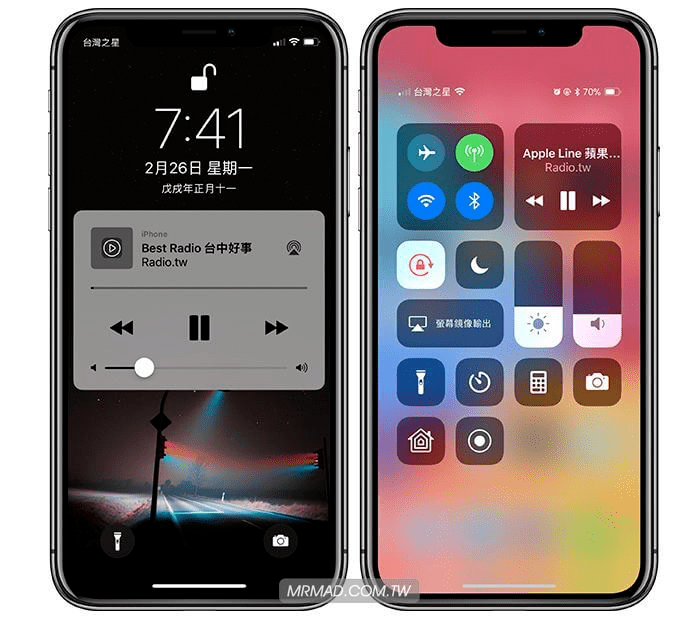
Still wondering how to make the iPhone directly receive radio stations in Taiwan? In fact, you don’t need to buy other plug-ins or change your mobile phone. You can listen to Internet radio as long as you have an Internet connection on your iPhone or iPad. Many of the current radio apps have their own characteristics, but today I’m going to introduce this “Radio” “.tw-Online Taiwan Radio FM” allows you to instantly listen to Taiwan’s local radio stations and Apple Line stations. It also supports iPhone X resolution, automatic timer countdown, Apple Watch, background playback and other functions.
Radio.tw-Online listening to Taiwan Radio FM App The biggest feature is that you can listen to it immediately when you open it. It really does not need to wait for seconds to open, and it supports radio stations including UFO UFO radio, Hit FM, Kiss Radio, Apple Line, Pop Radio , ICRT, Philharmonic, China Radio and other well-known radio stations. You can also click “i” to learn about the current program information, so that we can know when there will be special broadcast programs.
In addition, background playback is also supported. Even if you launch the App and return to the main screen or enter the standby mode, you can still play and broadcast.
If some stations are frequently listened to, you can “long press” the station name and it will be automatically added to the favorite list and placed at the top.
In addition, you can turn on the timer switch in the settings, and automatically stop playing the radio station after a few minutes of customizing, which is very suitable for users who like to listen to music before going to bed.
In addition, widgets are also supported, and the favorites list can be played directly from the widget.
In the settings in the lower right corner, there are also past playback history, alarm clock, automatic playback, and notification center. If you feel that the advertisement is a bit annoying, you may click to remove the advertisement and it can be removed at a cost of 90 yuan. By the way, sponsor the author to launch such a high-quality App.
Such as teaching like this article, then follow-up also would like more information about Apple, iPhone, Mac 3C hidden skills, tracking welcome Mr. FB crazy fans , Telegram , MEWE , Instagram and YouTube subscription , there will be more very useful Share the skills teaching with everyone.
YouTube Music, widget and integration with Waze in development on Android
Having recently improved the transition from a music video to the audio version only , YouTube Music is preparing to receive new and interesting features, as revealed by the decompilation of the latest version 3.27, already available on Play Store.
To analyze the version were as always the boys of APK Insight , the goal and look for lines of code not yet active, which describe features still in development and that could arrive in future versions. Youtube Music 3.27 highlights two possible novelties, the first refers to the integration with Waze , the GPS navigation application that already operates in a very similar way when used with Spotify. The strighe describes a “Waze-nav-bar” able to provide basic directions about routes while listening to audio content. There are also several icons related to navigation and the user interface, which we offer in the image below.
The second new arrival could be a widget for the home screen of Android phones , a new “app_widget_info.xml” resource describes a rather standard set of controls. The description defines the presence of the cover on the left side, flanked by the title of the song and the name of the artist, while below are the control buttons. The layout looks very similar to that of the Play Music widget, of course it is not yet active and it is not possible to describe it in great detail.
These possible novelties emerged from the decompilation of version 3.27, of course these functions are currently not available and it is not possible to define a possible date of arrival.
Napster, the king of streaming music payouts, now pays out $0.019 per stream. To meet the monthly minimum wage amount in the US ($1,472), an artist needs 77,474 total plays.
TIDAL remains a top player. The service pays artists $0.0125 per stream.
Artists on TIDAL now need 117,760 total plays to earn $1,472. Taking third place, Apple Music now pays $0.00735. Deezer’s per-stream rate rose to $0.0064, placing it right behind GPM
Spotify reportedly pays $0.00437 per play
Right behind Spotify, Amazon now pays $0.00402
Related content:
How Napster Changed Music
Nowadays we are used to listening to music mainly in streaming , through services like Spotify , Apple Music and YouTube (both normal and in premium version ). But it has not always been this way: in the early 90s, at the dawn of the Internet, the recording industry was still doing great, and most people heard cassette music or CD music . Then, with the arrival of Napster , everything changed. Today 19 years have passed since the attempt of the record companies to stop the new digital reality, and we want to take this opportunity to tell you its story.
Let’s start from the beginning: it’s the 90s , and the recording industry completely controls its distribution. Most people listen to music from physical media or from the radio . The piracy already exists, but is mostly limited to people who rippano CDs or cassettes that impact. It is therefore a limited phenomenon, especially when compared to what is about to happen shortly thereafter.
June 1999: Shaw Fanning , an 18-year-old programmer, launches Napster . It is, “trivially”, a peer-to-peer file sharing service , or “peer” , not centralized and where all the nodes are equally important. Users, by installing the program, make available to all the music saved on their computer. It’s a revolution, with 80 million people registered at its peak. In colleges, where the connection speed is higher than average, up to 61% of the traffic is downloaded MP3 . Music labels can not remain in your hands.
On December 7, 1999 the Recording Industry Association of America ( RIAA , the US equivalent of FIMI ) sued Napster for copyright infringement . The trial lasts until the first half of 2001 , and in the meantime Napster continues to grow, thanks to media attention. Several artists are publicly siding against the “piracy” service. In particular, Metallica are the protagonists of both a further legal action against Napster and a controversial and provocative TV commercial.
Eventually the industry wins the case, and in the J uly 2001 Napster was forced to close. But it is too late: the paradigm shift has taken place, and Napster users simply migrate to other similar platforms, in a fragmentation that is hard to combat. It is not possible to go back, but there does not seem to be an easy solution to counter piracy. As long as someone does not invent it.
Steve Jobs, in 2001 , in agreement with the various music producers, launches iTunes . There was not even the iPod , presented later that year, but it is still an epoch-making change. Apple’s digital market is a commercial success , and it gives the industry a chance to truly enter the twenty-first century. The idea of the album becomes old-fashioned, and they begin to dominate the individual songs, usually sold at 99 cents each . The landscape, however, is not as flourishing as before Napster: most of the distribution is no longer in the hands of production companies, and profit margins decrease considerably, especially for artists.
The download , legal and illegal, is not intended to remain. In 2005 YouTube arrives , and it’s another revolution. YouTube is now a platform used, as well as for amateur videos, to upload music illegally. YouTube is still the most used platform for on-demand music streaming . This time the record industry does not intervene as heavily as with Napster. On the one hand begin to emerge artists born on the web and close to this, started from the bottom thanks to digital platforms, on the other YouTube plays on the side of the industry, allowing the monetization of video and checking copyright infringements thanks to tools such as the Content ID .
In addition to Youtube, a whole series of services dedicated exclusively to streaming music, such as Spotify , Pandora and the same YouTube with YouTube Music , are starting to appear . Their mobile and flexible listening pattern changes the music industry once again. Apple itself begins to rely less and less on iTunes (at the beginning necessary to manage their iPhone ) and launches the Apple Music streaming service .
The transition to streaming and on-demand involves, with different timing and methods, other industries, such as film and television, with Netflix , Hulu and Amazon Prime Video . But while the latter, along with traditional networks and producers, bring more investment and greater content creation, this is not the case with music. Spotify, despite the enormous success, it is not yet active : Users premium are still much less than free , monetized with advertising, and profit margins for the various artists are very limited.
During the trial against Napster, public opinion has not simply divided into “scroungers” and people who instead recognize the right of artists to be paid for their work. There are also those in Napster who see a possibility, a democratization of music, with the possibility for some artists to be known by the public without going through contracts with record companies. Moreover, not all are convinced of the close link between illegal downloads and sales decline , indeed: some argue that, with the ability to more easily know more artists, people end up buying albums that otherwise would not even considered.
If these speeches seem familiar to you, you are right: the diatribe between those who see the network as a democratic place and those who see it as a place without rules has emerged many times over the years. When Taylor Swift went against Spotify , it was not a different attack than Metallica made against Napster. When people say that the illegal downloads of HBO’s TV series , like Game of Thrones , are actually a good thing, because they expand the pool of people who will then buy DVDs and merchandising, it is nothing that had not already been said at the beginning of the 2000s for Napster. The speech is obviously very complex, and it is neither easy nor correct to express a valid judgment for everyone.
You may be surprised to know that Napster still exists: after its closure, the logo and the brand have passed through many hands. Following the bankruptcy, the company was bought by Roxio , who rebels his Pressplay music service with the name Napster 2.0 . In 2008, it was sold to Best Buy , and in 2011 it was merged with the Rhapsody streaming service , which permanently changed its name to Napster in 2016. In a sense, therefore, Napster still lives , even if completely different from phenomenon that was in the 90s. Who knows that the future does not give us surprises, with a Napster again protagonist under another guise.
YouTube Music for Android updates | new streaming and download quality options
Google has released an update for its Youtube Music application for the Android platform.
The new features consist of new quality management options streaming and download.
As promised by Google, which last month had announcedconstant updates with improvements for its applications, today Youtube Music for Anroid has received an update.
Youtube Music for Android : new options for audio quality and downloads The new update has the main purpose of allowing the user to better manage the quality of streaming or downloads when watching videos or listening to Music with the application in question.
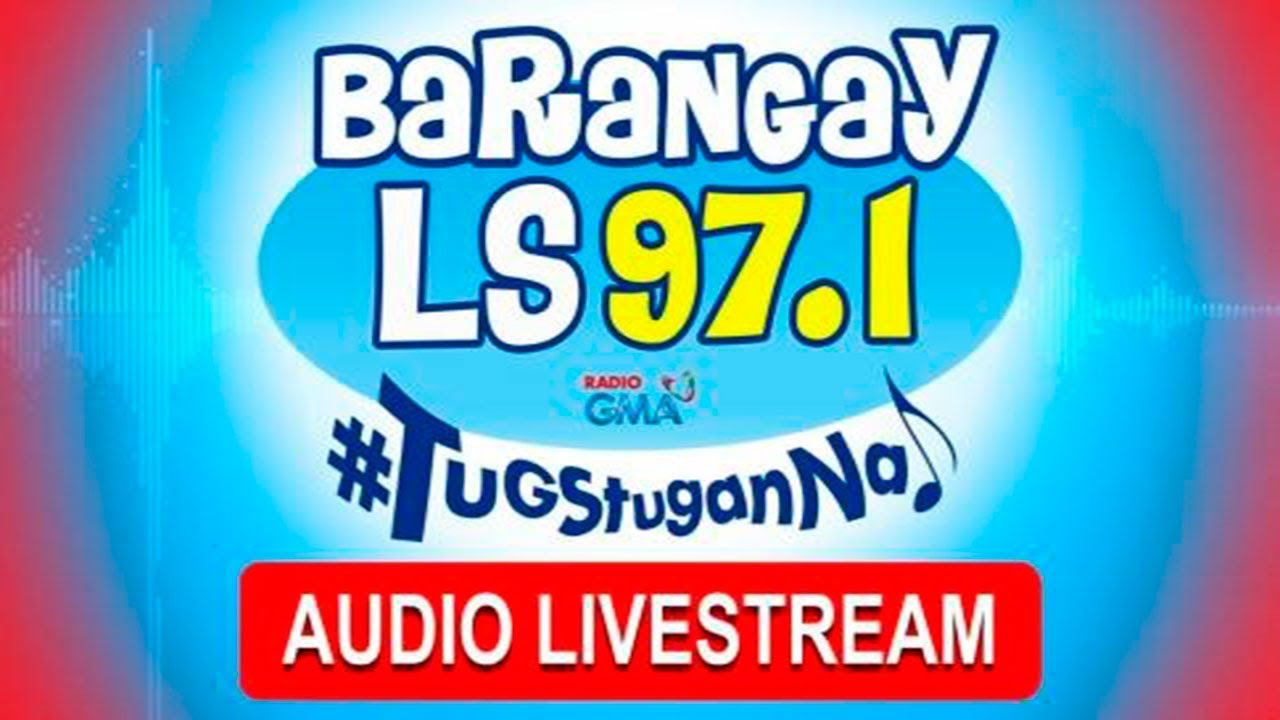
DWLS FM Barangay LS 97.1 live audio streaming has been the most requested by listeners and fans from overall the world.
Especially from OFW listeners, they have been asking and looking for reliable internet streaming of the station.
It used to be that only DZBB is the only GMA radio station streaming on the web. But now, DWLS finally has their own webcast.
To tune, visit http://www.gmanetwork.com/radio and there you will have an option to listen to DZBB AM or DWLS Barangay LS 97.1.
Opening the link will point to a popup window so make sure you web browser allows popups.
Then it will display an embedded audio player using YouTube. This means DWLS is streaming their radio broadcast using YouTube.
You cannot find though the live streaming video if you search it on YouTube website or YouTube app that is because the video is unlisted.
Now there are many benefits to streaming your radio station’s broadcast to Youtube, first it is free, reliable and the reach is unbelievably wide.
There is also this opportunity to monetize the streaming using ads or superchats and memberships given that their streaming video is uploaded by their verified GMA Network channel account.
There are however downsides too. If you don’t like other websites embedding your video that can be tricky although you turn off the embed option, that means your listeners can only listen or watch to your streaming video from the YouTube website or YouTube app.
Now that is a double edged sword for GMA because they want to embed their video onto their own webpage, disabling the embedding option means they cannot embed their video onto their own website, which by the way is also monetized by Adsense.
Another downside that the Content ID or Copyright matching on YouTube is aggressive. Even with a verified and known major YouTube channel owner like GMA Network they are still not spared from the copyright strikes or Content ID matches on YouTube. This means anytime, their streaming video can be taken down which is bad for listeners.
Unless of course they have a special arrangement with YouTube they will be spared from that.
The good news is that the listeners are the winners, finally they can listen to their favorite radio shows on DWLS Barangay LS 97.1.
It is clear though if this streaming capability is available to listeners outside the Philippines.


![[iOS] iPhone mobile radio station App, Radio.tw allows you to listen to Taiwan Radio FM online for free](https://radioonlinenow.com/wp-content/uploads/2021/09/img_4801.png?w=672&h=372&crop=1)


 Radio Online Now