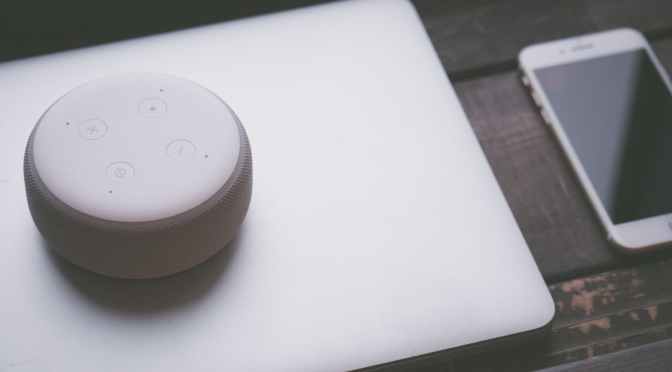
The latest study ” Ratings Prospects ” by Nuvoodoo , a company specializing in digital, market research, telemarketing and direct mail, has provided some interesting results in terms of both the use of radio and the impact on the medium. In the US, where the devices have grown, as from diffusion, from 30% in August 2017 to 43% in January 2019.
In essence, in the USA, smart speakers have now gone home FM / AM receivers (dropped at 40% ), ending up also affecting the traditional infrastructures via ether, as also evidenced by the radio giant iHeart.
The radio frequency of a second time (46%), is a tuning of the IP of an FM radio station, with a percentage of 39% (14% for the radio streaming in AM), followed by 34% by the use of the smart speaker as an agenda for appointments ( “set a reminder “). Streaming on demand (SOD) services for the delivery of music, although this is only 33% for Spotify and at 27% for Pandora and Amazon Music.
Streaming is basically the same as listening to radio stations and moreover, if we evaluate the use of all connected devices, but this is indicative of a virtuous cycle that is reporting radio listening in the past 10 years.
Also relevant is the use of “smart speakers for the use of podcasts” , which recorded an excellent 14% (” fast growing trend” ), close to the use of the intelligent loudspeaker for listening to news, which marks a good 17%.
However, there are still many difficulties encountered by users in identifying the favorite station on their smart speaker; to the question ” He had problems asking Alexa to tune in one of his favorite AM or FM stations “, as many as 46% have, unfortunately, answered positively.
“To overcome this problem, we need to equip ourselves with a skill made according to specifications provided by Amazon, which will make it available only once the verification and validation process has been completed” , explains Massimo Rinaldi, engineer of the Radio TV 4.0 Area of Consultmedia (competence structure) multilevel linked to this periodical).
“Moreover, the” start “and” launch “keys made available by Amazon are a bit more intuitive than the” talk with “,” let me speak with “and” pass me “of Google ( as evidenced by the video demo that we report, ed )” , intervenes Francesca Santucci, Smart Speaker Developer of 22HBG , one of the first and most important Italian companies specialized in the development of radio-related skills and actions.
But there is another, perhaps even more important, the motivation that must push publishers to equip themselves with skills and action: the ability to provide its users with the very important podcasts, the most promising area of advertising and radio publishing.
“Without skills and action, listening mediated by aggregators on smart speakers (when possible) is limited to live streaming”, emphasizes Rinaldi. ” As Consultmedia, the Radio-TV 4.0 work plan for the next two years is to investigate all aspects related to the use of smart speakers as radio receivers. There is a lot to work, also considering the fact that it is now clear that not only on the smart speakers, even on cars, but the preferential selection mode of radio stations within five years will also be almost exclusively vocal, ” continues the engineer.
” This means working on the positioning on the various platforms of streaming streams but – in several cases – also on the name of the stations (criticality already detected in the US, ed). It is not enough to be present more or less effective on all aggregators; you must be easy to find by users. In the last three years, we have determined the DTT landing of almost 50% of the visual radio present today. By 2022 we want to be able to say the same thing as the skill and action of Italian radios”, concludes Rinaldi.
Google is about to reach a new record, Google Assistant will be active on over a billion devices by the end of the month . The forecast was made by Mountain View itself during and the news was released during the CES 2019 in Las Vegas.
This incredible achievement could only be imagined at the launch of Google Assistant during 2016 . The Mountain View company has set itself the goal of creating an Artificial Intelligence able to help the user in all aspects. Whether it’s voice commands, searches or even jokes, Google Assistant is always present and available on Android devices and more. The initial roll-out provided compatibility only with a few selected devices, while now it is available already from the first activation of each device.
The advances of the assistant are evident and continuous while the development of Google Assistant proceeds sustainably. Suffice it to say that only a year ago there were about 400 million devices that supported it. To date, the assistant is present almost everywhere, on smartphones , smartwatch, passing through tablets, headphones and smart speakers. This is why it is not hard to believe Big G.’s prediction.
Obviously the impact of Google Assistant is much more marked than just devices . The estimates do not take into account the number of users who use the assistant that are certainly greater than one billion. We must in fact consider that there are devices that can work in multi-user mode, such as smart speakers. According to Mountain View, active users are 4 times higher than last year but there are no certain figures on which to base themselves.
Radio DJs are the first true influencers way before social media.
In fact radio is the first social media.
So tapping the services of radio personalities to be brand ambassadors is a no brainer.
Today DJ Suzy starts digital endorsement for GrabFood for McDonalds, a partnership between the Singapore-based ridr hailing app and the fast food chain.
The radio host had this to say on her timeline.
Ayoko na mag-host. I have found my true calling. 🛵
Uhm kaso lang wala akong sense of balance di ako marunong mag-bike. 🤦🏻♀️
Congratulations @grab_ph & @mcdo_ph on today’s contract signing for this deliciously convenient and super exciting partnership! 💚❤️💛
(📸: @rhonfame 🤗)
Sonos is definitely a brand known by audiophiles: its speakers are famous for their construction quality and sound quality in the same way. The US company has decided to collaborate with Ikea for the development and marketing of a new speaker for the house, which will take the name of Symfonisk. According to the two giants, this new series of smart speakers will have the quality of Sonos without renouncing the more affordable price offered by Ikea .
The new Symfonisk will have different designs, and can be applied either to the walls (by support) or placed on flat surfaces. The goal is to create a multi-user network able to offer smart functionality to all users. The price of this new line of loudspeakers is not yet known, but they should arrive in all Ikea stores starting next August. In short, high quality audio at a low price. Will it really be like that?
In other news
SMART SPEAKER: CHINA TO OVERTAKE USA FOR THE NUMBER OF DEVICES IN CIRCULATION
In the latest data published by eMarketer on the smart speaker market, in 2019 China will surpass the US by number of smart speakers in circulation, with 85.5 million against 74.2.
However, the United States will still remain for a while the country with the widest penetration, 26% VS 10% due to the two years ahead of the launch of the first device, 2014 (Amazon Echo) against 2016 (DDDD by JD.com) . Follow Uk, Germany, France and Canada.
Among the innovations presented by Lenovo here at CES in Las Vegas we find Lenovo Smart Tab with Amazon Alexa : a hybrid device a bit ‘tablet and a little’ smart speaker. Here’s how this curious but useful s mart speaker with detachable screen works .
Lenovo Smart Tab is a two-part device: a smart speaker with Amazon Alexa assistant with a 10-inch Lenovo tablet (which will be launched in two different versions).
The display / tablet rests above the smart speaker with an interlocking and magnetic system called the LenovoSmart Dock. It is a new category of 2-in-1 tablets that turn into smart screens with Amazon Alexa.
The commands of Alexa will work only if smart speakers and tablets will be connected, otherwise it will not give you any kind of indications. The indications reproduced will be of audio type but also visual. We tried to ask the Lenovo Smart Tab “what a long time ago in Las Vegas” and we were informed of the memeteorological conditions both by the voice of Amazon Alexa and the information appeared on the display.
If necessary, however, you will be free to decide to detach the display from the base to use it as a real tablet with Android operating system Oreo in stock version.
This smart speaker with detachable screen can of course control your devices for the smart home as any other smart speaker would do, but it does it with an extra gear: visual information that never hurts.
In short, this Lenovo Smart Tab created in collaboration with Amazon Alexa opens the door to new hybrid and multi-functional devices that will enrich your home.
6 FREE RADIO IDS for stations that are unique and number 1 in their market. For stations that airs fun and entertaining format, inspired by the greatest radio station in the planet. If your station is the one, then these radio IDs are the ONE!
These are 6 useful radio IDs great for on air contests, after commercials or segue to commercial stops.
Also comes with breakfast jingle, at work day part jingle, an afternoon drive home jingle and night time jingle.
This is the one, the one for fun and entertainment, the one
This is the one, the one in the morning when you wake up, the one
The one, the one you listen to all day, this is the one
The one, the one radio you tune in on your way home, this is the one
This is the one, the only one that makes you feel good all night long, the one
This is the one, the one for fun, music and more, the one
Digital Radio is the name chosen by the marketing to launch the broadcast of the transmissions made with the Eureka 147 standard, better known as Dab + . The Dab (Digital Audio Broadcasting) is actually quite mature stuff: it’s a European project that dates back to the eighties. Nearly 20 years ago, in 1995, Norway and the United Kingdom activated the first DAB digital radio channels. In 2007 the evolution was born, the Dab +. And it is with this standard that broadcasters today also broadcast in Italy. To receive a digital program you need to equip yourself with a special receiver, either home or car.
The development of audio compression codings: the DAB + is born
Take advantage of the efficiency and performance of MPEG-4 (AAC) with the result of having the same audio quality at a lower bitrates.
Another major innovation was the addition of video / multimedia capabilities for Digital Audio Broadcasting, allowing DAB to become a digital DMB (Digital Multimedia Broadcasting) mobile TV platform as well as a digital multimedia radio platform.
DMB and DAB + are extensions of the DAB technical base.
More than half a billion people around the world today are able to receive over 1,000 radio stations and DAB data services. Most of these contents have gone from the experimental to the regulated phase, and the use of the Eureka 147 standard has been confirmed throughout Europe, the Far East and Australia.
Radio is changing, not being left behind, going digital
It is a digital broadcasting system. DAB is the transmission technology designed to integrate the analog FM radio band in the medium term.
The DAB system was developed in Europe as part of the EUREKA 147 project and is currently operational in many countries. The DAB family of standards includes DAB and DAB + for digital radio and DMB for mobile TV. They are global and open standards, the perfect medium for transmitting terrestrial digital radio signals.
At its birth in the late 1980s, the original DAB (Digital Audio Broadcasting) was based on MPEG Audio Layer II, which was also the object of investment and experimentation for EuroDab Italy, today it is still commonly used in some European countries. due to a large number of receivers on the market.
Napster, the king of streaming music payouts, now pays out $0.019 per stream. To meet the monthly minimum wage amount in the US ($1,472), an artist needs 77,474 total plays.
TIDAL remains a top player. The service pays artists $0.0125 per stream.
Artists on TIDAL now need 117,760 total plays to earn $1,472. Taking third place, Apple Music now pays $0.00735. Deezer’s per-stream rate rose to $0.0064, placing it right behind GPM
Spotify reportedly pays $0.00437 per play
Right behind Spotify, Amazon now pays $0.00402
Related content:
How Napster Changed Music
Nowadays we are used to listening to music mainly in streaming , through services like Spotify , Apple Music and YouTube (both normal and in premium version ). But it has not always been this way: in the early 90s, at the dawn of the Internet, the recording industry was still doing great, and most people heard cassette music or CD music . Then, with the arrival of Napster , everything changed. Today 19 years have passed since the attempt of the record companies to stop the new digital reality, and we want to take this opportunity to tell you its story.
Let’s start from the beginning: it’s the 90s , and the recording industry completely controls its distribution. Most people listen to music from physical media or from the radio . The piracy already exists, but is mostly limited to people who rippano CDs or cassettes that impact. It is therefore a limited phenomenon, especially when compared to what is about to happen shortly thereafter.
June 1999: Shaw Fanning , an 18-year-old programmer, launches Napster . It is, “trivially”, a peer-to-peer file sharing service , or “peer” , not centralized and where all the nodes are equally important. Users, by installing the program, make available to all the music saved on their computer. It’s a revolution, with 80 million people registered at its peak. In colleges, where the connection speed is higher than average, up to 61% of the traffic is downloaded MP3 . Music labels can not remain in your hands.
On December 7, 1999 the Recording Industry Association of America ( RIAA , the US equivalent of FIMI ) sued Napster for copyright infringement . The trial lasts until the first half of 2001 , and in the meantime Napster continues to grow, thanks to media attention. Several artists are publicly siding against the “piracy” service. In particular, Metallica are the protagonists of both a further legal action against Napster and a controversial and provocative TV commercial.
Eventually the industry wins the case, and in the J uly 2001 Napster was forced to close. But it is too late: the paradigm shift has taken place, and Napster users simply migrate to other similar platforms, in a fragmentation that is hard to combat. It is not possible to go back, but there does not seem to be an easy solution to counter piracy. As long as someone does not invent it.
Steve Jobs, in 2001 , in agreement with the various music producers, launches iTunes . There was not even the iPod , presented later that year, but it is still an epoch-making change. Apple’s digital market is a commercial success , and it gives the industry a chance to truly enter the twenty-first century. The idea of the album becomes old-fashioned, and they begin to dominate the individual songs, usually sold at 99 cents each . The landscape, however, is not as flourishing as before Napster: most of the distribution is no longer in the hands of production companies, and profit margins decrease considerably, especially for artists.
The download , legal and illegal, is not intended to remain. In 2005 YouTube arrives , and it’s another revolution. YouTube is now a platform used, as well as for amateur videos, to upload music illegally. YouTube is still the most used platform for on-demand music streaming . This time the record industry does not intervene as heavily as with Napster. On the one hand begin to emerge artists born on the web and close to this, started from the bottom thanks to digital platforms, on the other YouTube plays on the side of the industry, allowing the monetization of video and checking copyright infringements thanks to tools such as the Content ID .
In addition to Youtube, a whole series of services dedicated exclusively to streaming music, such as Spotify , Pandora and the same YouTube with YouTube Music , are starting to appear . Their mobile and flexible listening pattern changes the music industry once again. Apple itself begins to rely less and less on iTunes (at the beginning necessary to manage their iPhone ) and launches the Apple Music streaming service .
The transition to streaming and on-demand involves, with different timing and methods, other industries, such as film and television, with Netflix , Hulu and Amazon Prime Video . But while the latter, along with traditional networks and producers, bring more investment and greater content creation, this is not the case with music. Spotify, despite the enormous success, it is not yet active : Users premium are still much less than free , monetized with advertising, and profit margins for the various artists are very limited.
During the trial against Napster, public opinion has not simply divided into “scroungers” and people who instead recognize the right of artists to be paid for their work. There are also those in Napster who see a possibility, a democratization of music, with the possibility for some artists to be known by the public without going through contracts with record companies. Moreover, not all are convinced of the close link between illegal downloads and sales decline , indeed: some argue that, with the ability to more easily know more artists, people end up buying albums that otherwise would not even considered.
If these speeches seem familiar to you, you are right: the diatribe between those who see the network as a democratic place and those who see it as a place without rules has emerged many times over the years. When Taylor Swift went against Spotify , it was not a different attack than Metallica made against Napster. When people say that the illegal downloads of HBO’s TV series , like Game of Thrones , are actually a good thing, because they expand the pool of people who will then buy DVDs and merchandising, it is nothing that had not already been said at the beginning of the 2000s for Napster. The speech is obviously very complex, and it is neither easy nor correct to express a valid judgment for everyone.
You may be surprised to know that Napster still exists: after its closure, the logo and the brand have passed through many hands. Following the bankruptcy, the company was bought by Roxio , who rebels his Pressplay music service with the name Napster 2.0 . In 2008, it was sold to Best Buy , and in 2011 it was merged with the Rhapsody streaming service , which permanently changed its name to Napster in 2016. In a sense, therefore, Napster still lives , even if completely different from phenomenon that was in the 90s. Who knows that the future does not give us surprises, with a Napster again protagonist under another guise.






 Radio Online Now